
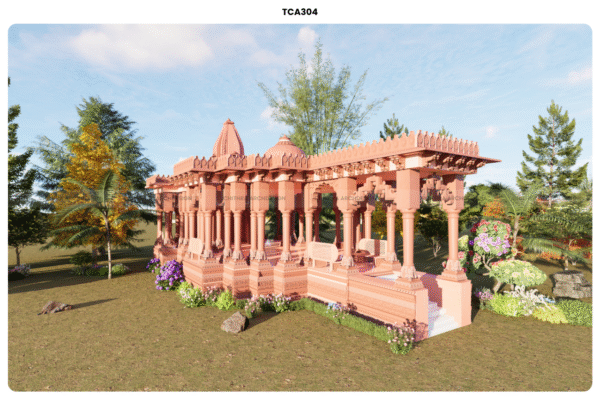
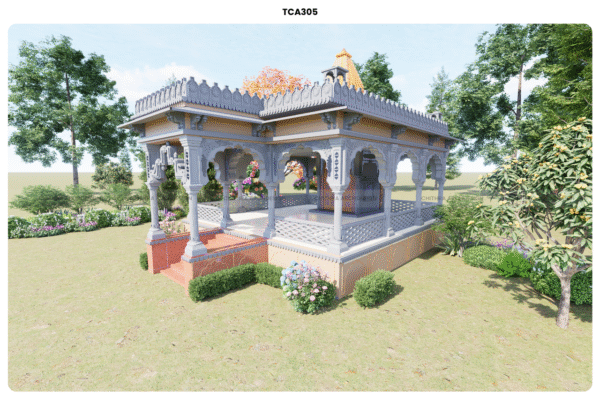
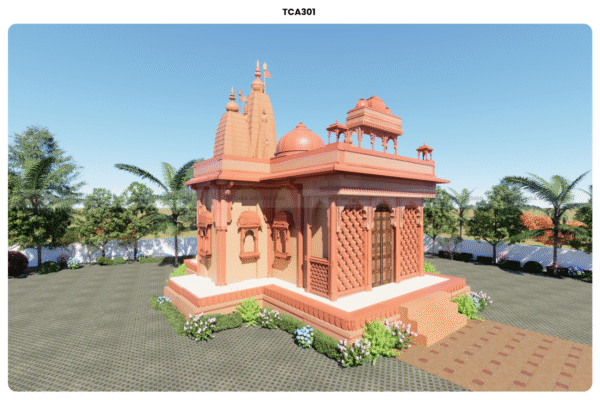
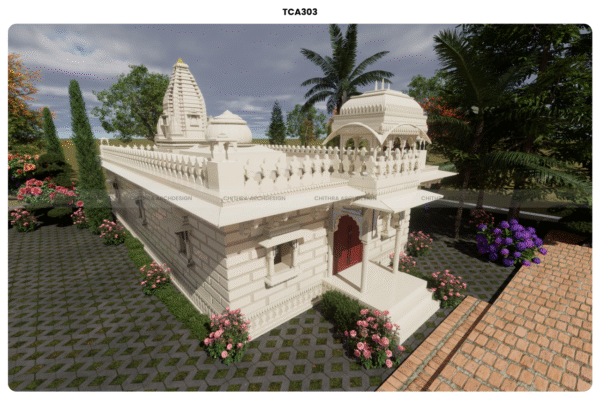
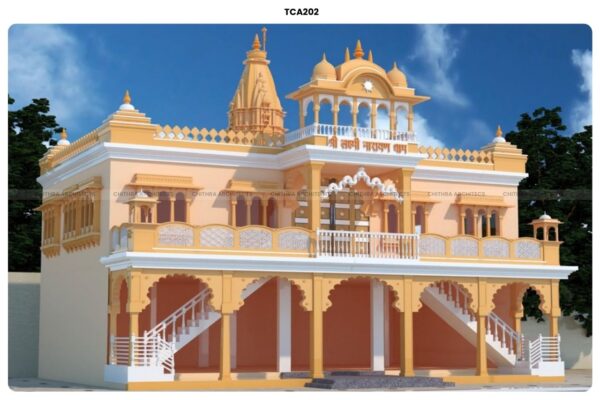
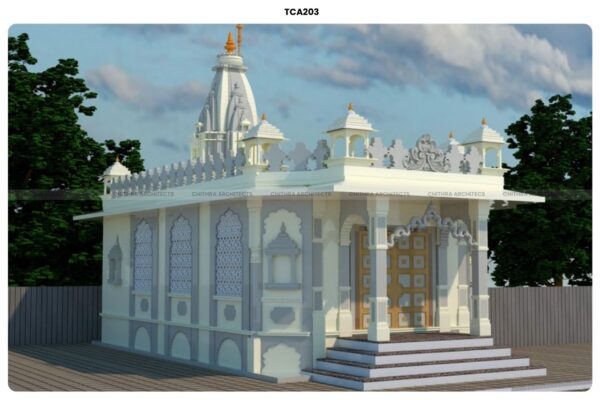
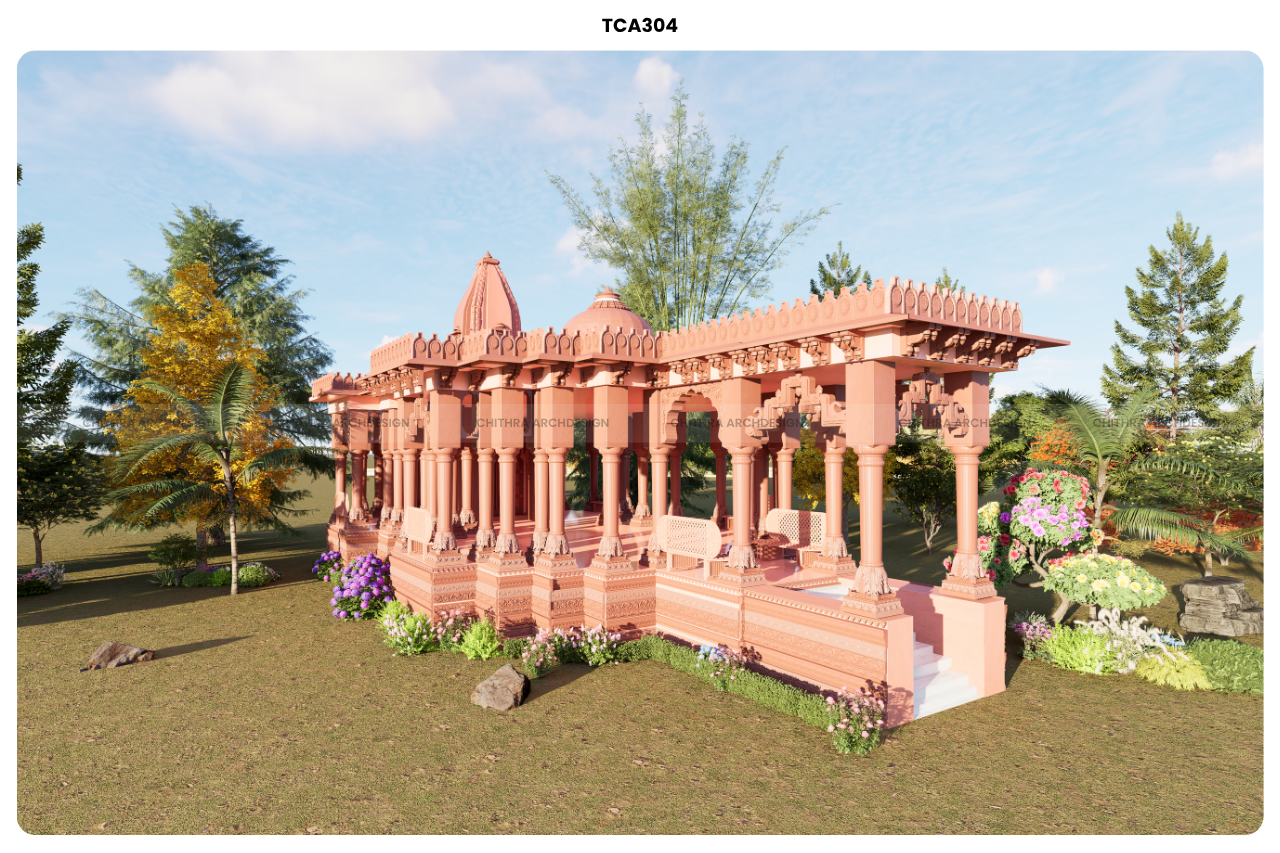
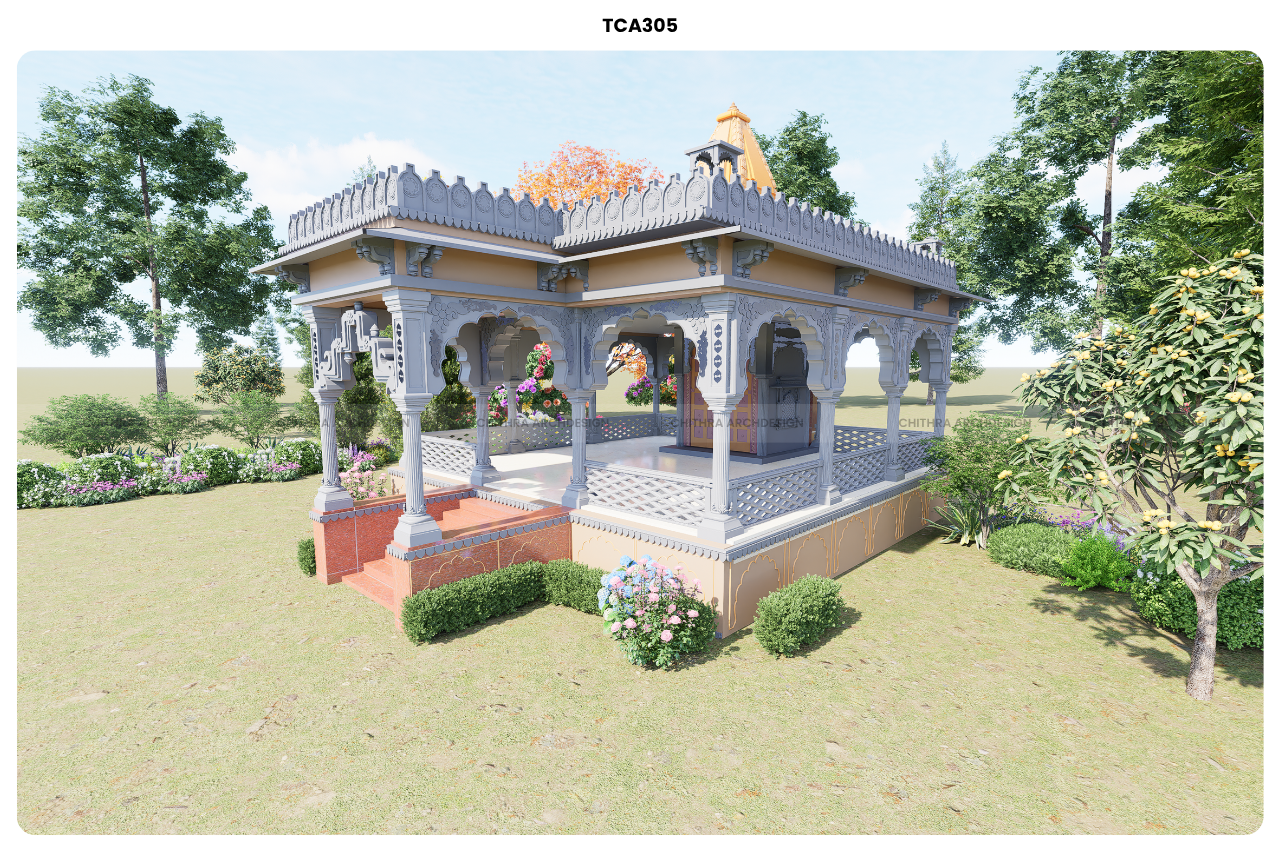
Temple Detailing


Temples are not merely physical structures; they are sacred spaces that connect the devotee to the divine through devotion, worship, meditation, rituals, and spiritual reflection. The planning of a temple holds profound cultural, spiritual, and architectural importance in India. Every element-from the entrance to the sanctum, from the mandapa to the prakara-follows principles rooted in Shilpa Shastra, Vastu Shastra, sacred geometry, and traditional craftsmanship.
Temple planning involves thoughtful arrangement of worship areas, pathways for devotees, ritual preparation zones, spiritual halls, and the Garbhagriha (sanctum) where the deity resides. The layout must support a harmonious flow of energy, enhance the spiritual experience, and maintain the sanctity of rituals.
At Chithra Archdesign, we specialize in professional temple planning for small family temples, village mandirs, community temples, traditional regional temples, and large spiritual complexes. Our approach blends cultural tradition, devotional symbolism, Vastu Shastra principles, and practical functionality to create sacred spaces that radiate positive energy and divine presence.
Importance and Benefits of Temple Planning
1. Preserves Sacred Energy
The temple layout is planned to naturally channel positive spiritual vibrations, enhancing the devotional experience.
2. Supports Ritual Practices
Different rituals require separate zones such as sanctum space, pradakshina path, and priest preparation rooms. Proper planning ensures rituals are performed smoothly.
3. Enhances Devotee Experience
A well-designed path for entering, praying, resting, and exiting helps maintain calm, meaningful movement for visitors.
4. Cultural and Traditional Continuity
Temple planning maintains the identity of regional temple styles and ensures alignment with ancient Indian temple-building traditions.
5. Efficient Use of Space
Even small private temples benefit from optimized sanctum placement, worship area space, and orientation.
6. Sustainability and Durability
Traditional planning integrates natural ventilation, climate-appropriate structures, and long-lasting materials.
Temple Planning Process
Our temple planning approach is systematic and sensitive to both tradition and modern context.
1. Consultation and Vision Understanding
We begin with:
- Deity selection (e.g., Shiva, Vishnu, Devi, Ganesh)
- Ritual practice requirements
- Community scale of worship
- Aesthetic and cultural preferences
- Budget and land dimensions
Everything begins with the spiritual intention of the temple.
2. Site Study and Orientation Analysis
We examine:
- Land slope and soil conditions
- Surrounding natural elements (hills, trees, rivers, etc.)
- Sunrise and sunset direction
- Entrance approach and visibility
Correct orientation ensures the temple radiates energy in harmony with nature.
3. Sacred Geometry-Based Layout Planning
Traditional guidelines such as:
- Garbhagriha (Sanctum) placed in the Brahmasthan
- Pradakshina Path (circumambulation route)
- Mandapa (assembly/prayer hall)
- Dwajasthambam (flag post)
- Gopuram / Shikhara (temple tower)
These are placed with mathematical precision to sustain spiritual resonance.
4. Zone Planning for Ritual Functions
We divide the temple into zones for:
- Worshippers
- Priests
- Storage of sacred items
- Flower and offerings room
- Lighting and lamps preparation
- Temple kitchen (Naivedya)
- Festival procession areas
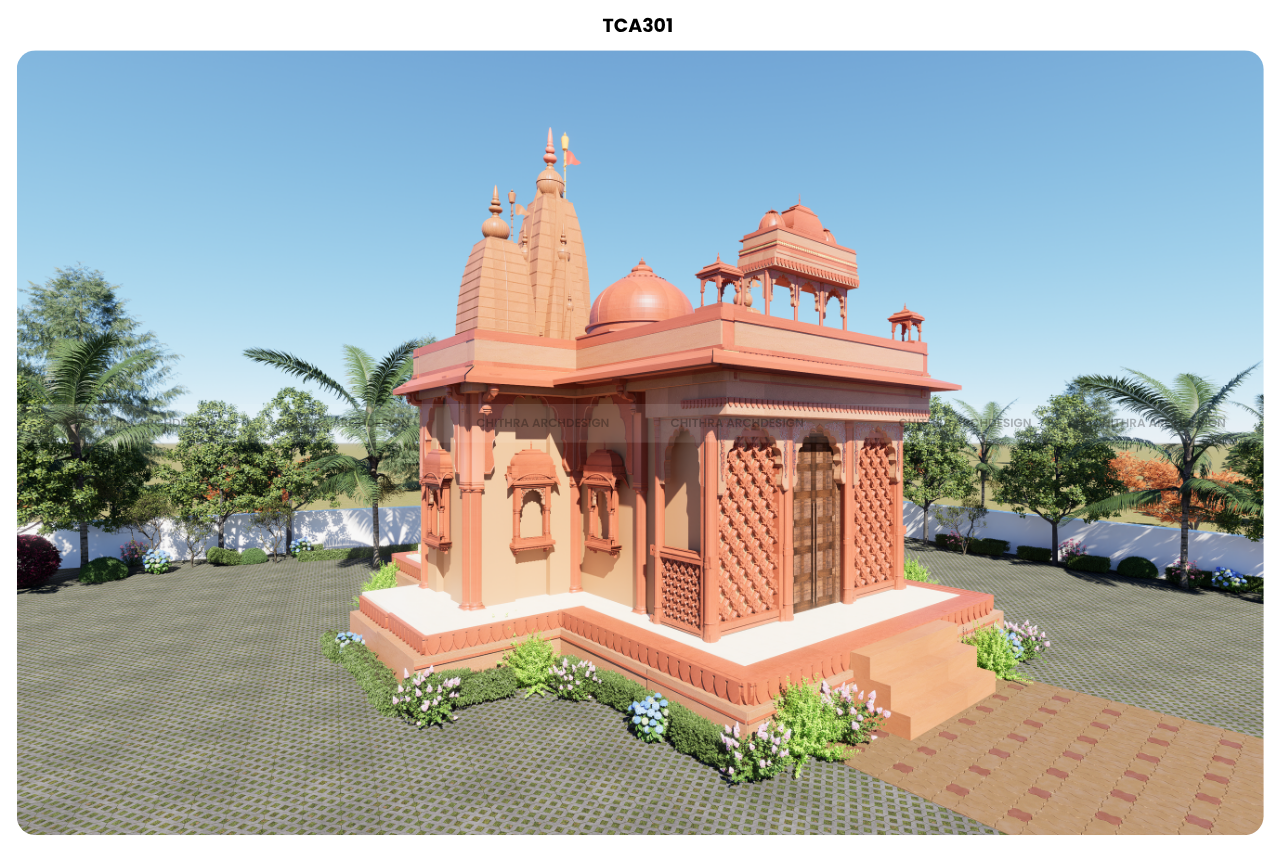
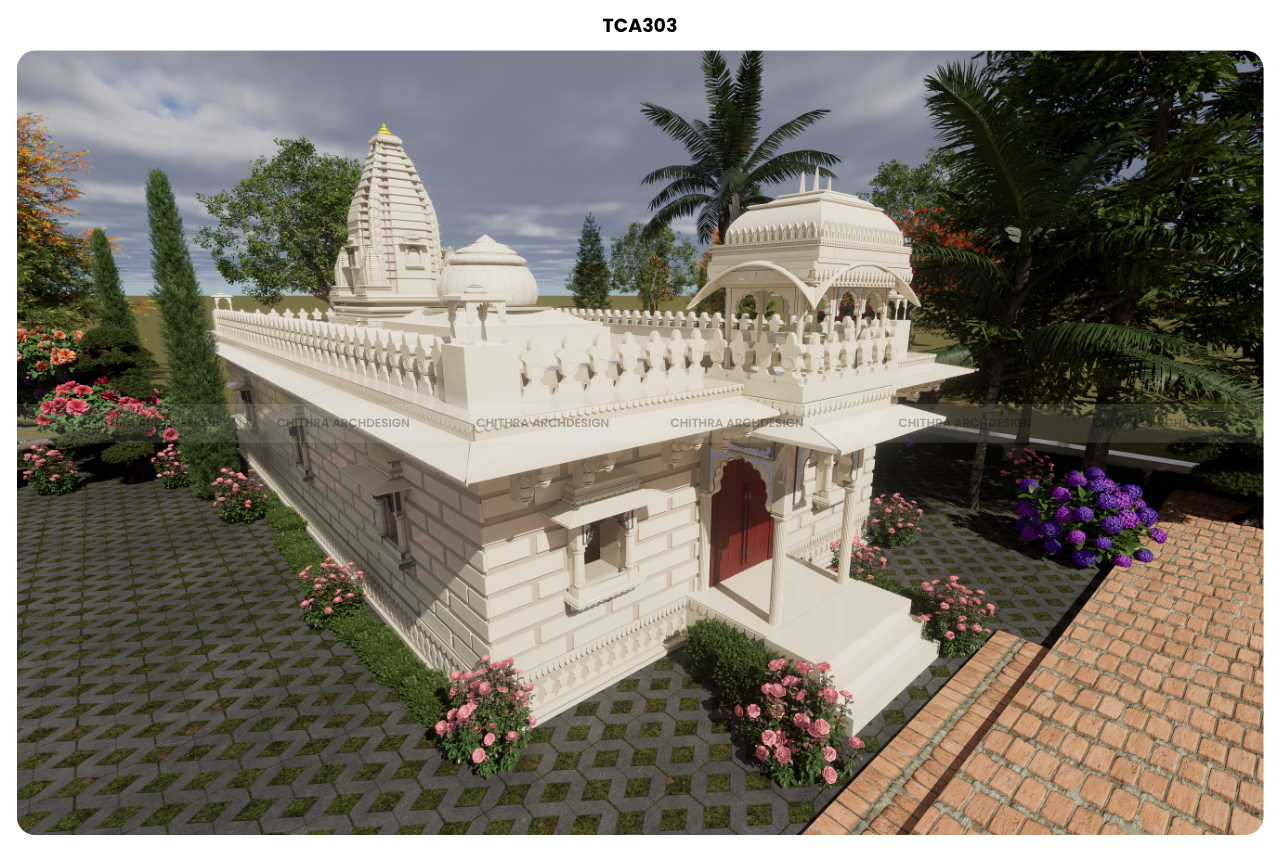
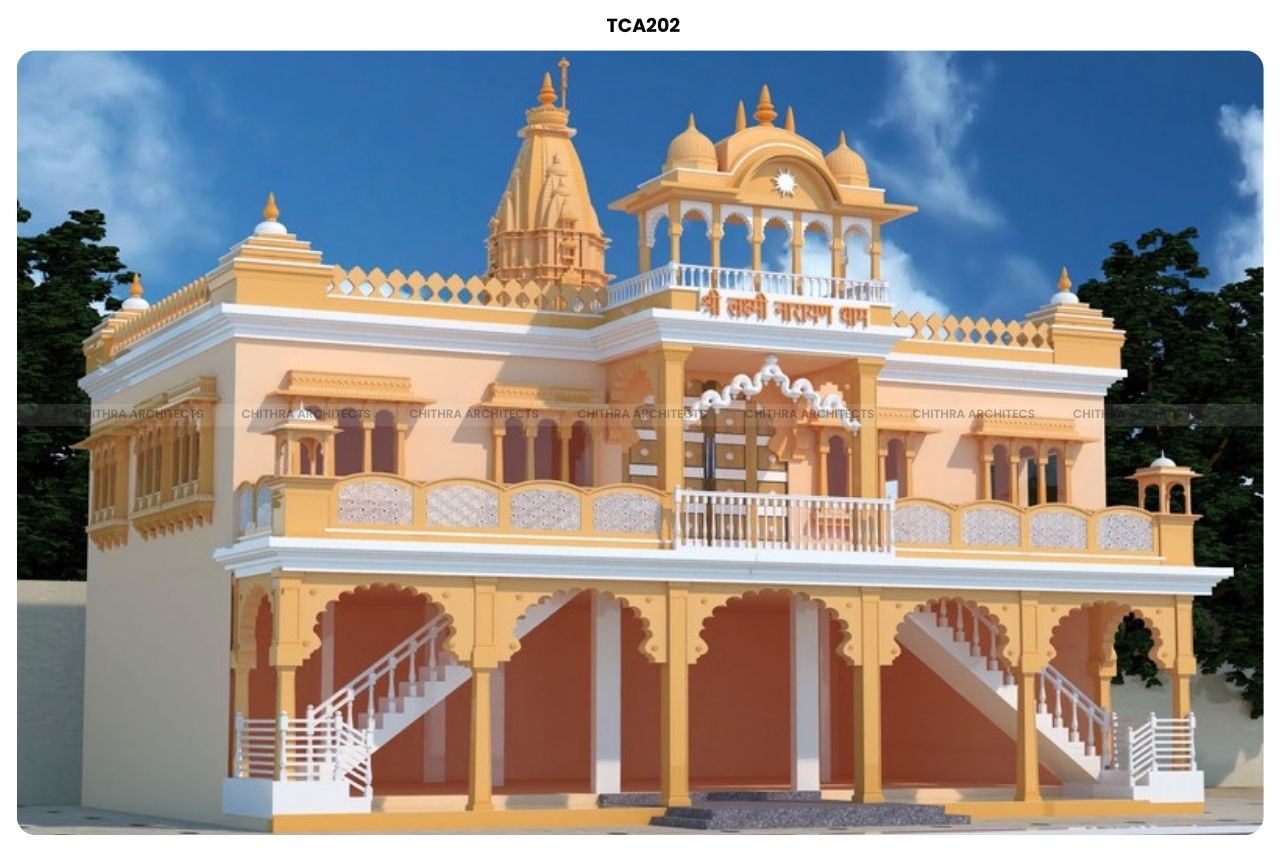
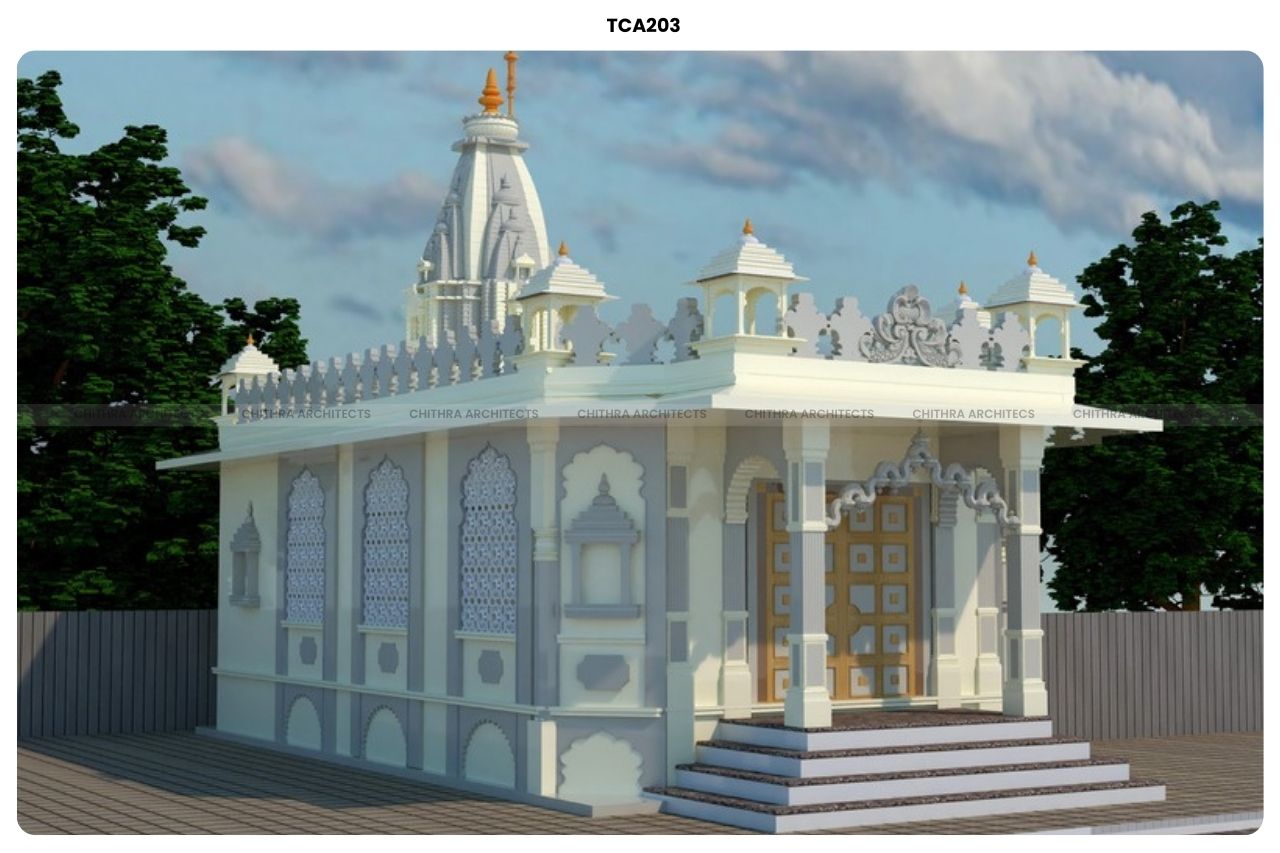
5. Elevation Design Process
Our elevation designers create temple facades inspired by:
- South Indian Dravidian Temples (Gopuram, vimanam detailing)
- North Indian Nagara Temples (Shikhara, mandapa sculpting)
- Kerala Traditional Temples (Tiled roofing, wooden carvings)
- Hoysala and Jain Traditions (Intricate stone detail and layered shikharas)
Visual harmony and sacred symbolism guide elevation designs.
6. Structural Design Process
Our structural planners ensure:
- Temple base stability
- Safe elevation loads
- Long-term durability
- Climate suitability
- Earthquake, rain, and wind resistance
Traditional temple durability often lasts centuries-our goal matches this standard using modern analysis.
Styles of Temple Planning Covered
Dravidian Style (South Indian Temples)
Features include large gopurams, pillared halls, carved stone idols, spacious mandapas. Common in Tamil Nadu and Karnataka.
Nagara Style (North Indian Temples)
Characterized by a rising shikhara over the sanctum, curvilinear towers, and decorative stonework. Seen in Madhya Pradesh, Rajasthan, and Uttar Pradesh.
Kerala Temple Style
Woodwork, copper/tile roofing, inner courtyard shrines, minimalistic and deeply spiritual layout. Designed for regions with heavy rains.
Vesara Style (Hybrid Form)
Fusion of Dravidian and Nagara styles, historically associated with Chalukya and Hoysala temples.
Modern Mandir Planning for Homes and Apartments
Simple Garbhagriha with wooden or stone mandap structure, compact but spiritually strong.
Village and Community Temples
Designed for:
- Public worship
- Festival gatherings
- Cultural and spiritual celebrations
Ashram and Meditation Temple Planning
Focus on silence, minimalism, natural materials, and open prayer spaces.
Regional Relevance Across India
India’s temple traditions vary deeply by region, and temple planning must reflect respect for local customs:
Region | Temple Character | Features Reflected in Planning |
Tamil Nadu | Ancient Dravidian stone temples | Gopuram emphasis, large mandapas |
Kerala | Wooden craftsmanship & tiled roofs | Sloped roofs, oil-lamp oriented sanctums |
Karnataka | Hoysala sculptural richness | Star-shaped sanctum layouts |
North India | Towering shikhara and carved panels | Heighted sanctum superstructure |
Odisha | Kalinga stone temples | Strong vertical tower geometry |
Maharashtra | Cave and hill-temple heritage | Natural rock integration |
We preserve authenticity to cultural lineage while planning new temples.
Vastu Integration in Temple Planning
Vastu Shastra plays a significant role in temple planning. The aims are to:
- Strengthen divine energy field
- Ensure sanctity of the sanctum
- Facilitate peaceful devotional experience
Key Vastu considerations:
- Sanctum (Garbhagriha): traditionally in the West facing East, so deity faces devotee entering from East.
- Entrance: East or North direction preferred for positive flow.
- Pradakshina Path: Space around sanctum for circumambulation.
- Temple Tank / Water Body: Placed in North-East direction for purity and energy.
- Bells & Lamp Rooms: Placed near mandapa entrances.
- Kitchen & Naivedyam: Located in the South-East fire direction.
These principles ensure spiritual stability and inner peace within the temple environment.
FAQs
What information is required before starting temple planning?
- Land dimensions
- Location photographs or GPS
- Deity selection
- Worship style (daily puja, festival rituals)
- Budget and construction timeline
Can you plan small private family temples?
Yes, we specialize in compact, spiritually aligned home and courtyard temples as well as large public temples.
Do you follow Vastu Shastra and Shilpa Shastra guidelines?
Yes. Our temple planning aligns with scriptures, traditional geometry, and cultural design systems.
Do you provide elevation and structural support?
Yes, elevation designers and structural planners work together to ensure safety, beauty, and longevity.
Can temple planning be customized to regional traditions?
Absolutely. We design temples according to local culture, regional styles, and devotional preferences.
Conclusion
A temple is a beacon of spiritual energy, cultural identity, and divine connection. The planning and design of a temple must be approached with devotion, precision, and traditional wisdom.
At Chithra Archdesign, we honor this responsibility by creating sacred spaces that inspire peace, devotion, and timeless beauty. Whether it is a small family mandir, a village temple, a large community mandir, or a meditation ashram, we bring cultural authenticity, sacred geometry, and spiritual sensitivity to every project.
To begin your temple planning, contact our design consultant today and create a spiritual space that will inspire generations.
Explore More
- Vastu planning services
- Vastu house plans
- Resort planning services
- Temple planning & Vastu
- House planning services
- Modern house plans
- Bungalow floor plans
- Traditional house plans
- Haveli style house plans
- Maharashtra Wada style plans
- Gujarat traditional house plans
- Kerala Nalukettu house plans
- Spanish / Mediterranean plans
- Heritage house planning
- Design services & consultations
- Elevation & facade design
- Complete residential planning & structural services