
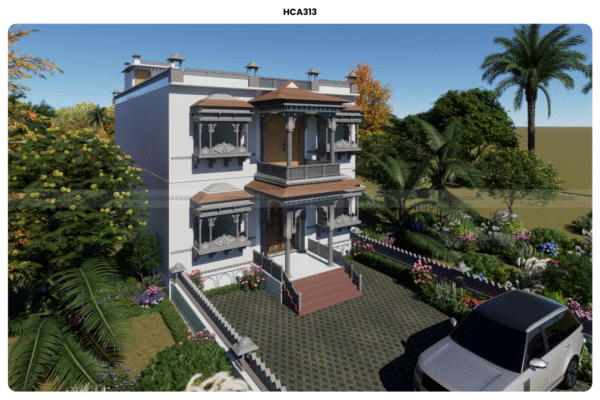
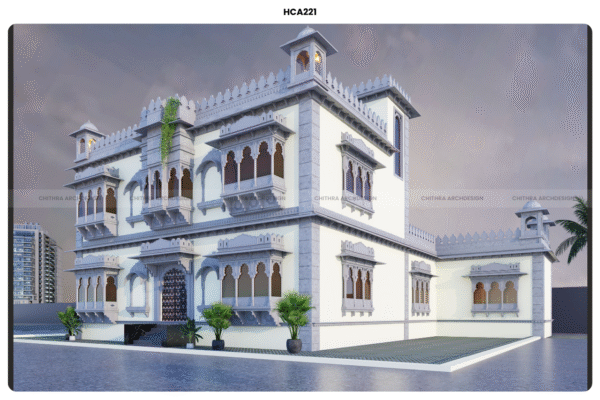
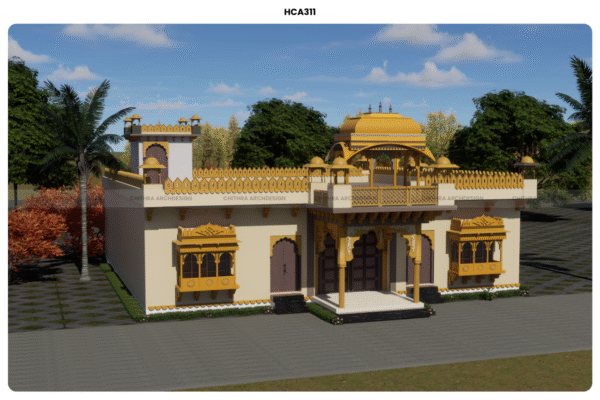
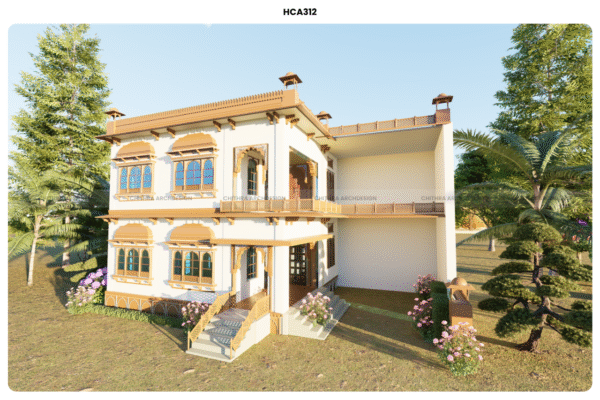
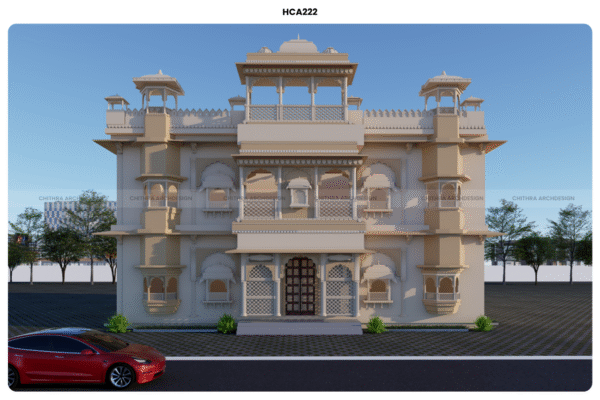
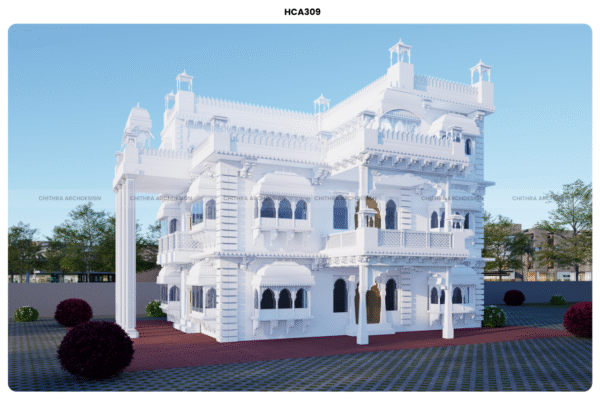
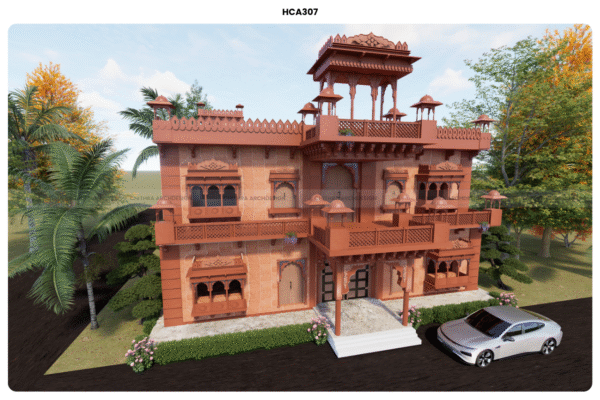
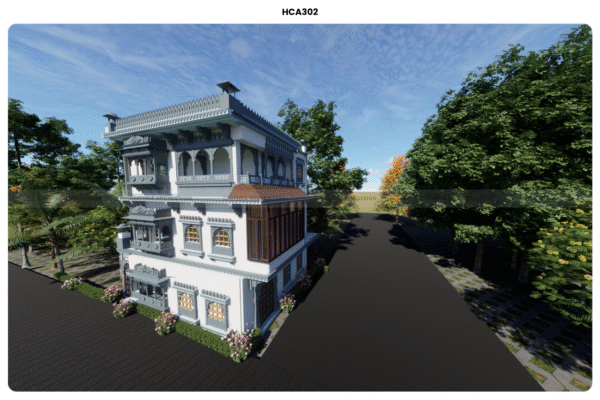
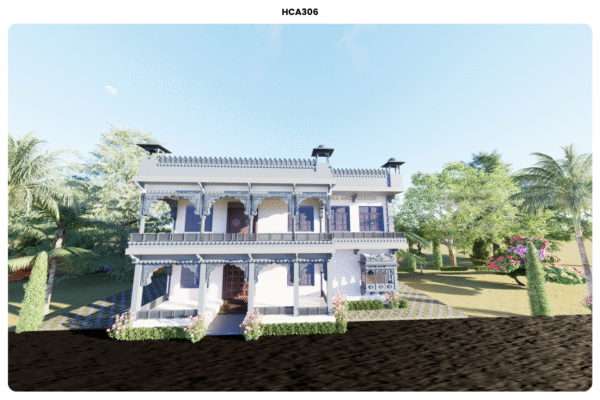
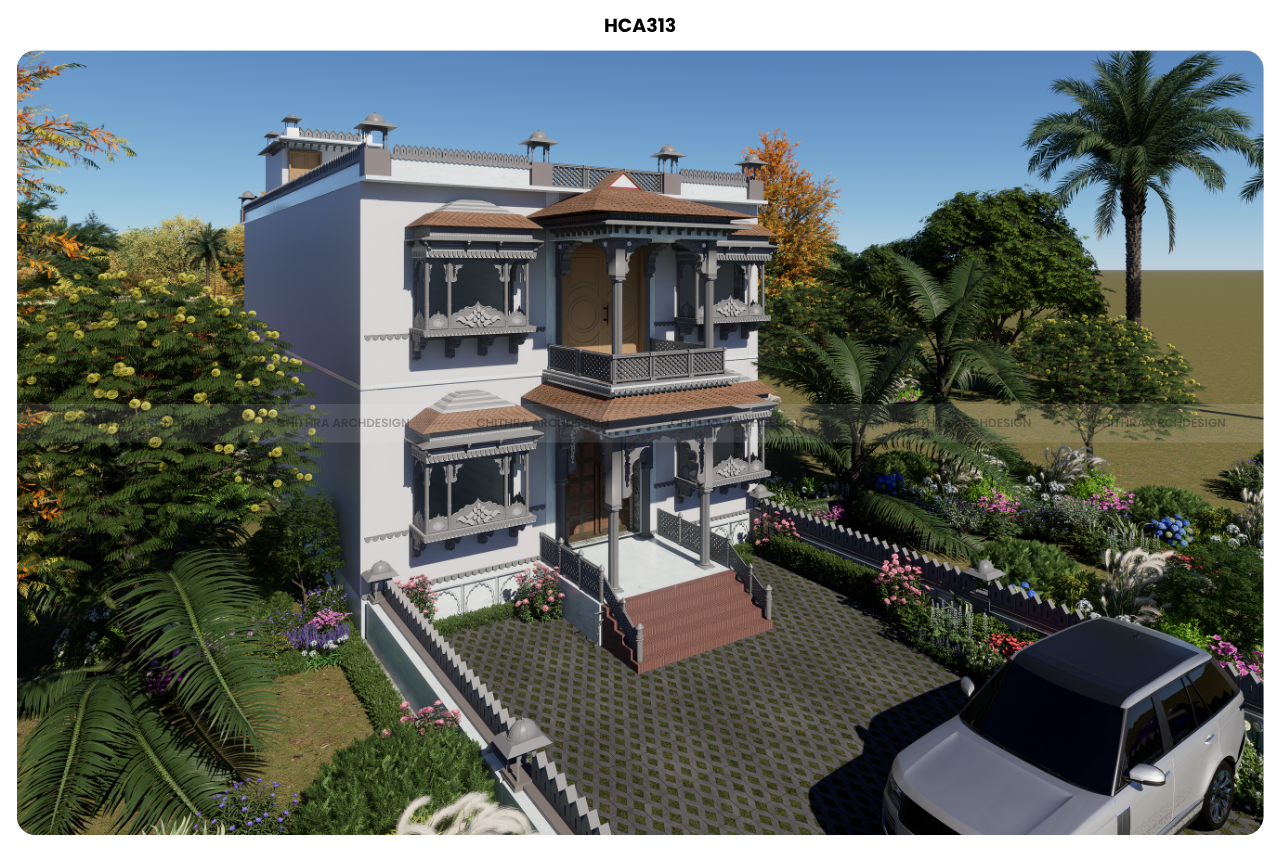
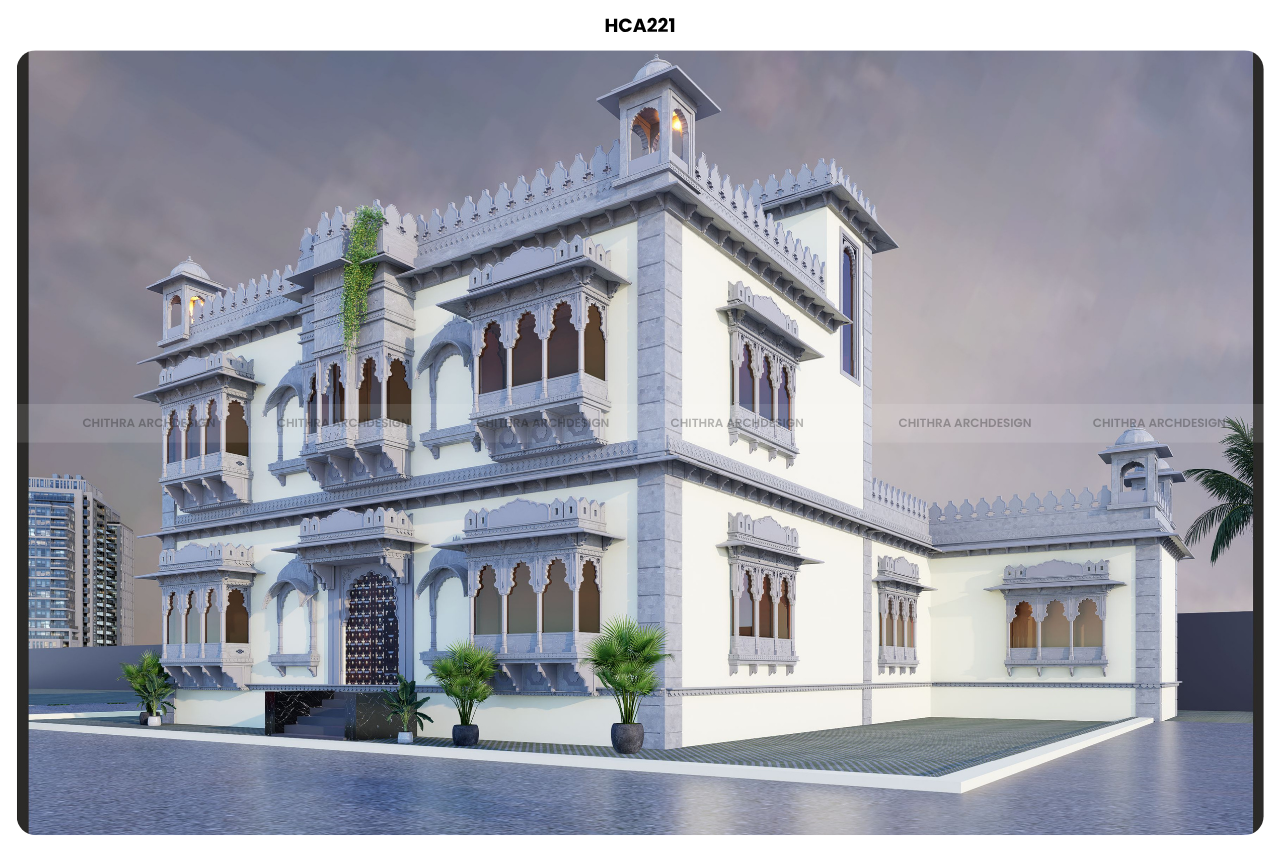
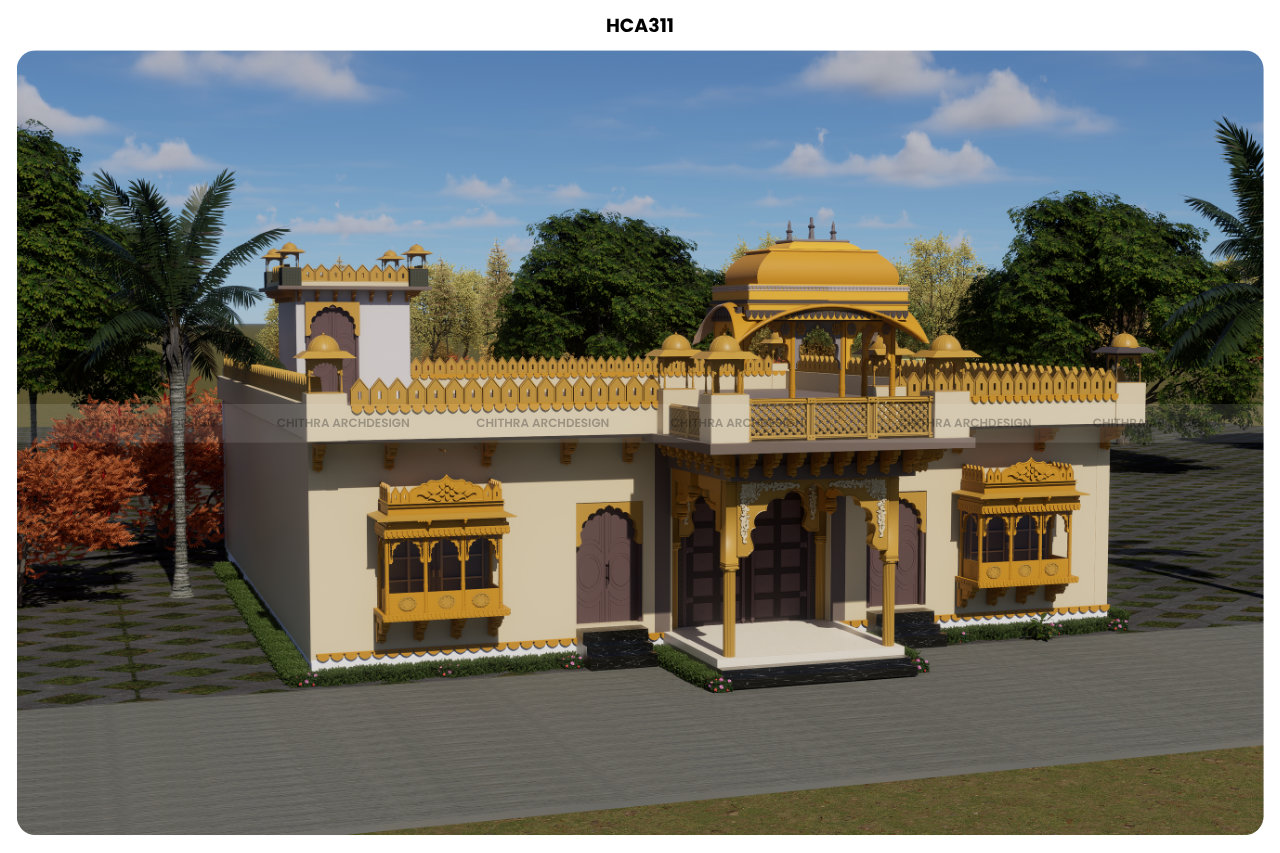
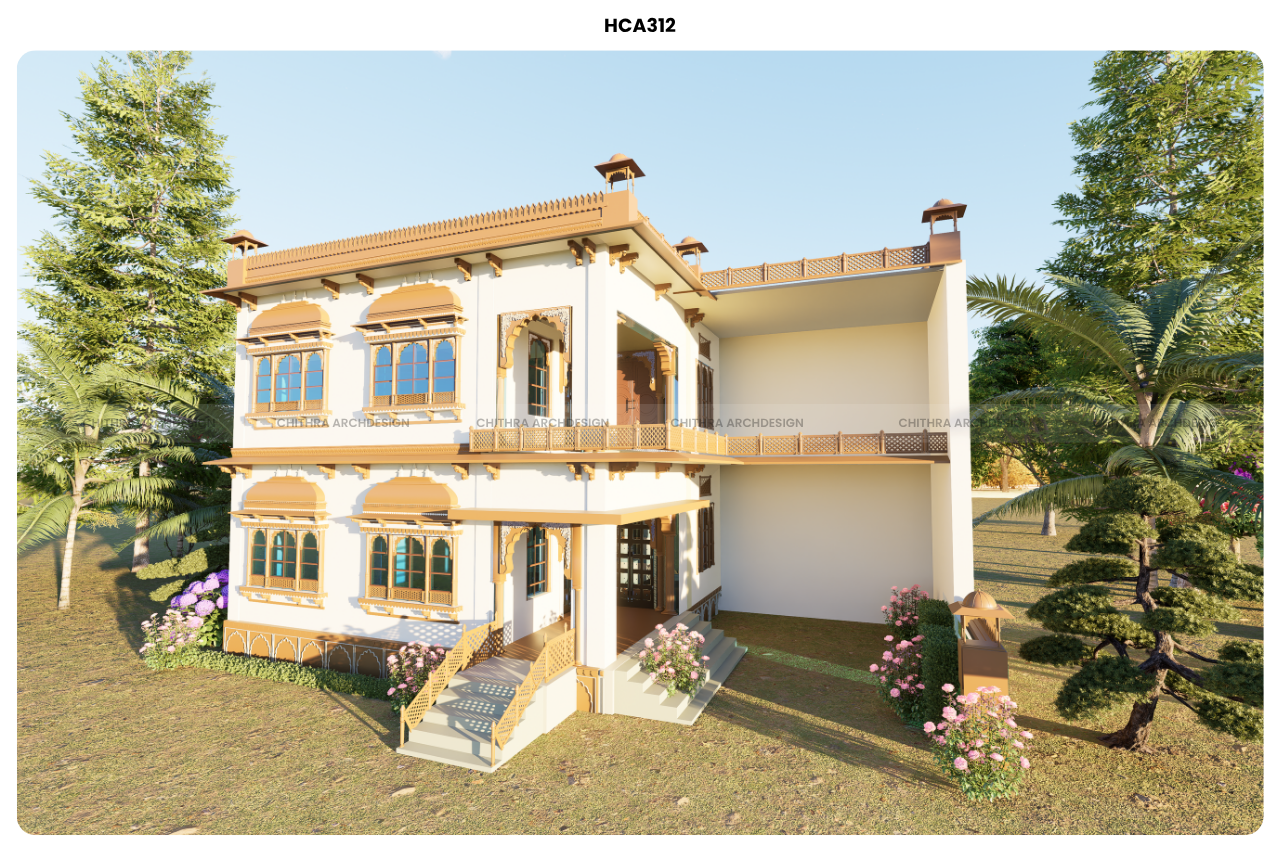
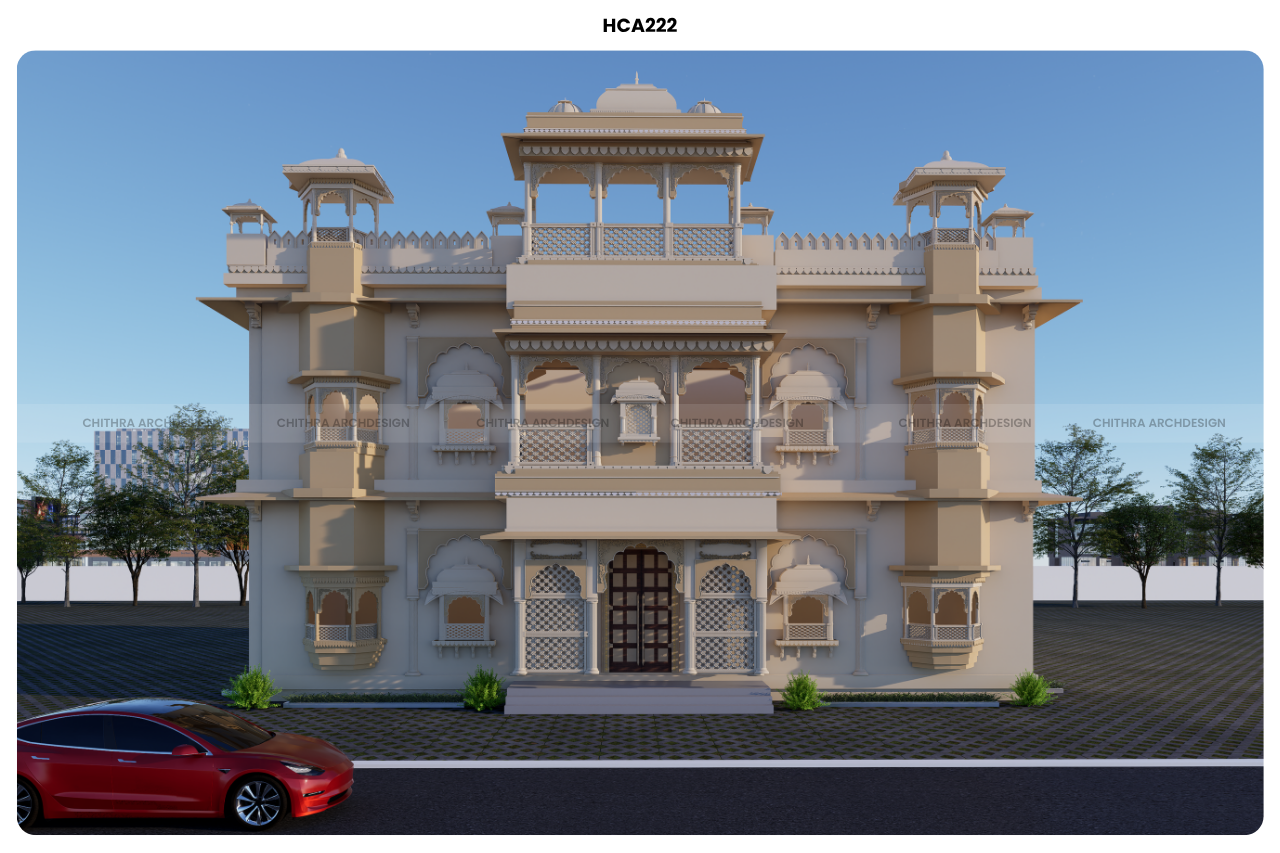
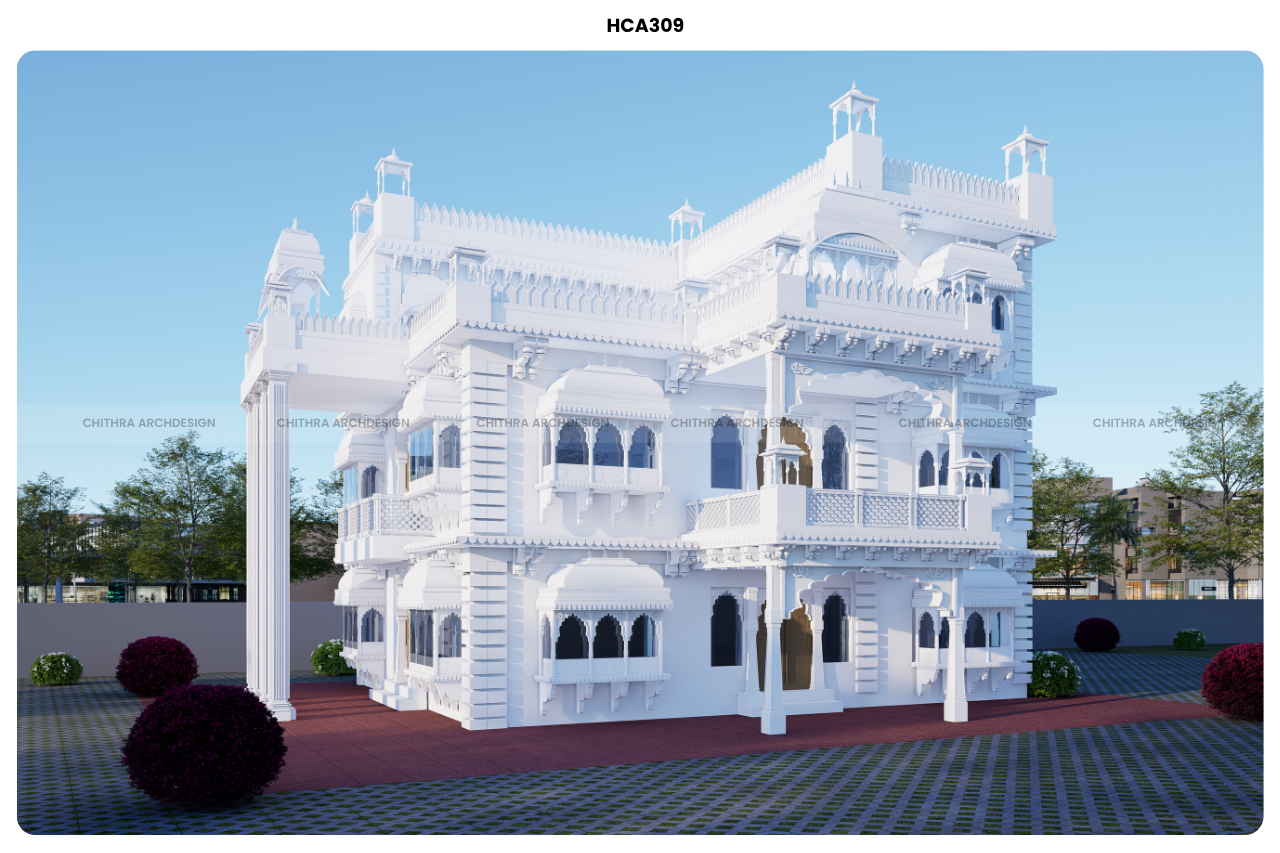
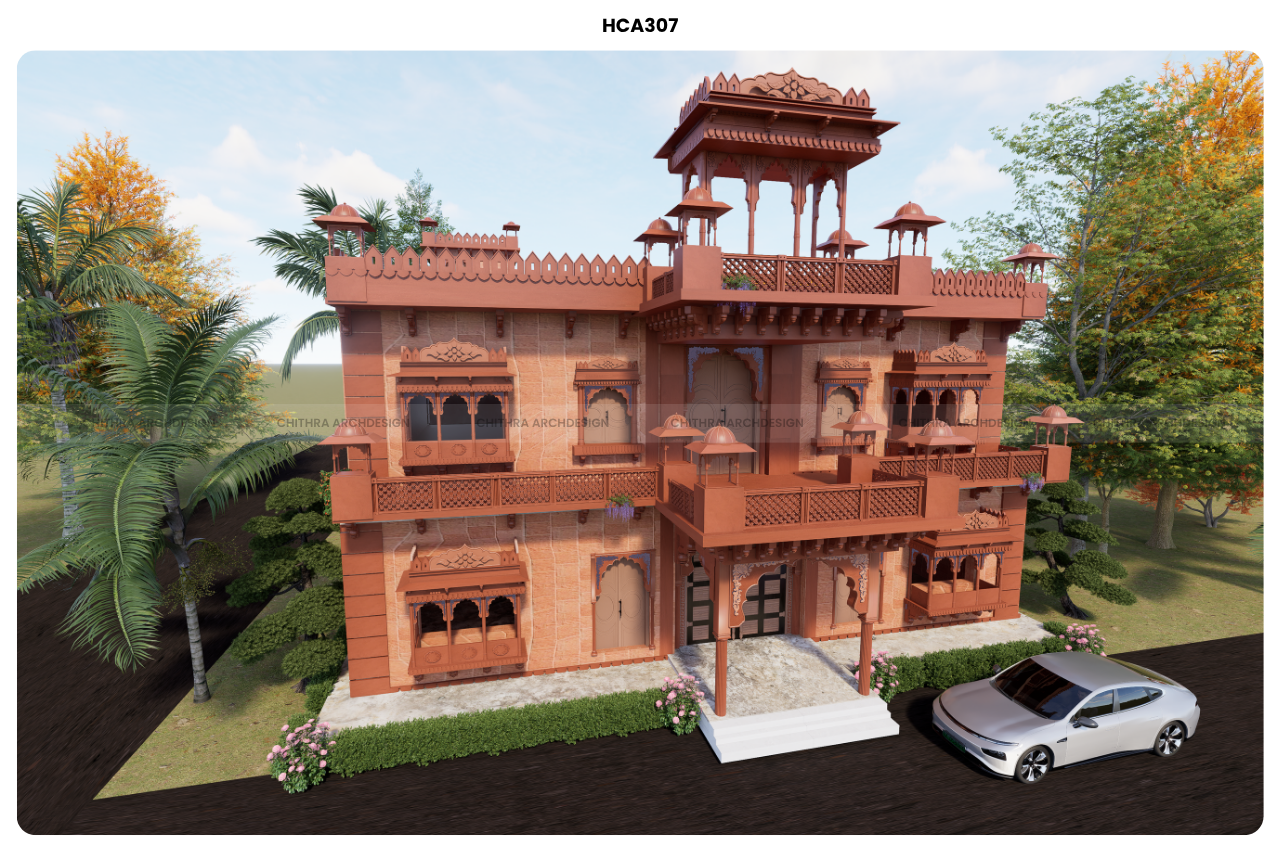
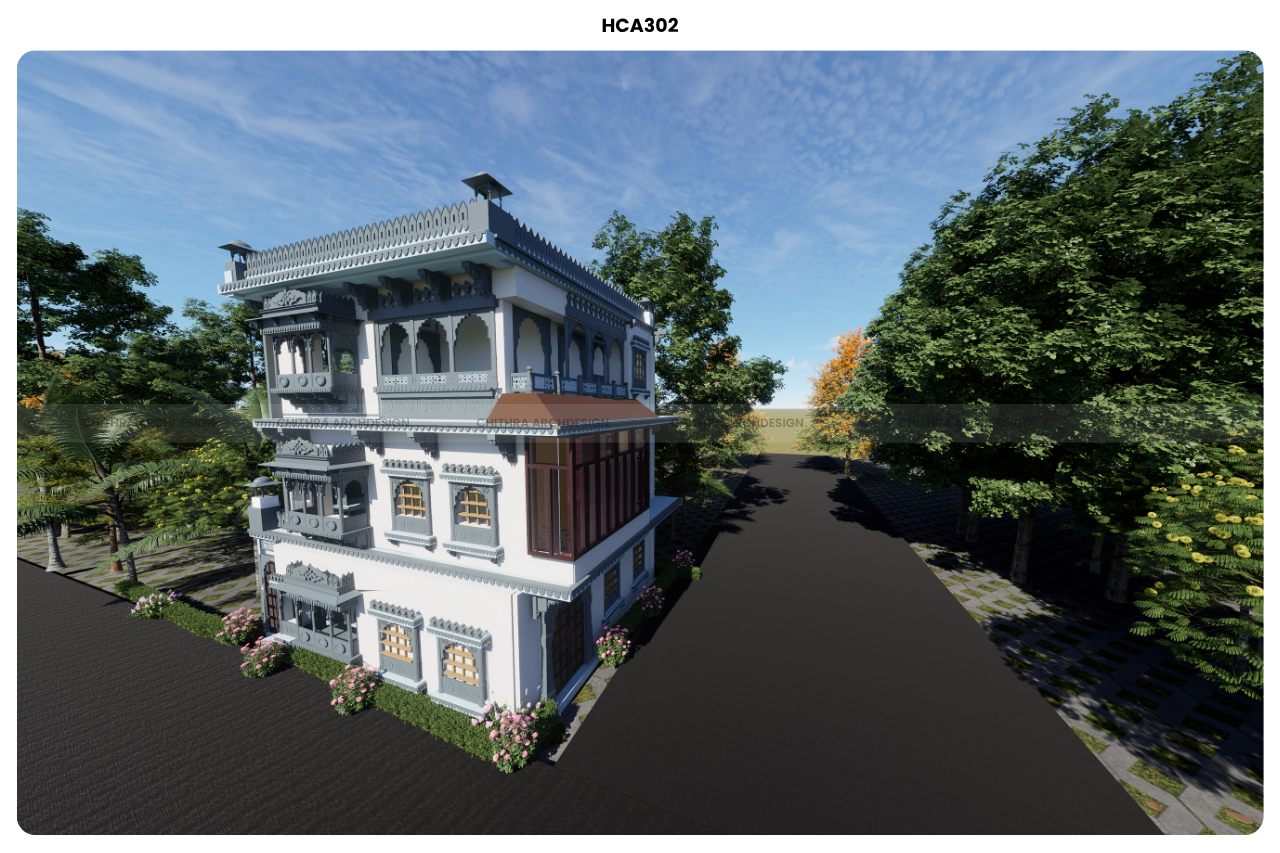
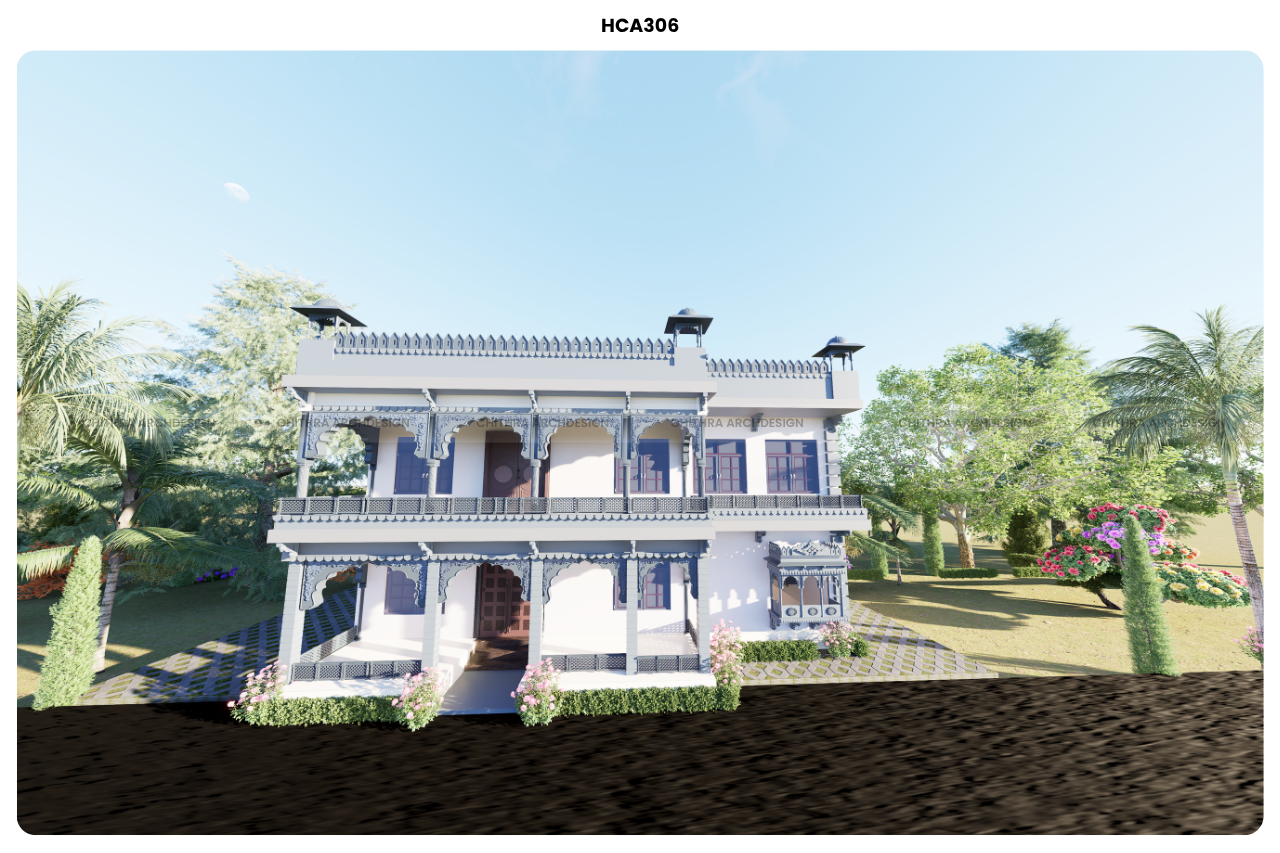
Jharokhas


Traditional house elevation design is deeply rooted in cultural identity, historical aesthetics, and the values of Indian living. Unlike purely modern exteriors that emphasize minimalism and sleek forms, traditional house elevations showcase warmth, cultural symbolism, handcrafted detailing, and architectural heritage carried across generations. These elevations celebrate regional identity-whether it is the sloping tiled roofs of Kerala, intricate wooden columns of Tamil Nadu, stone-crafted jalis of Rajasthan, or earthy courtyard homes seen across Central India.
At Chithra Archdesign, we specialize in designing culturally enriched traditional house elevations that combine visual authenticity with structural durability, modern functionality, and comfort. Our elevation designers, home planners, and Vastu consultants ensure that every façade reflects timeless Indian aesthetics, climate adaptability, and emotional belonging.
Benefits / Advantages of Traditional House Elevation
Traditional Indian designs are not only visually appealing but also built with purpose. They are climate-sensitive, Vastu-aligned, and emotionally grounded in heritage.
Key Advantages
- Cultural Identity & Emotional Connection: Traditional designs reflect family roots, community identity, and ancestral values.
- Climate-Responsive Construction: Sloping roofs, natural ventilation layouts, and wide verandas suit India’s tropical climate.
- Natural & Durable Materials: Use of stone, clay tiles, red bricks, wood, lime plaster, and natural shades ensures longevity.
- Vastu Harmony: Traditional planning naturally follows directional balance and energy flow principles.
- Enhanced Comfort: Courtyards, verandas, jharokhas, and shaded balconies offer cool, breathable living environments.
- Aesthetic Depth & Character: Handcrafted details, carvings, and heritage patterns add unique visual richness.
Traditional house elevations create a graceful presence that stands out amidst urban modern buildings-bringing timelessness into contemporary living.
Planning Process for Traditional House Elevation
A traditional house elevation design requires precision, understanding of cultural elements, material selection, and spatial awareness. Our project planning follows a detailed and systematic approach:
1. Client Requirement Study
We understand:
- Regional cultural influences
- Heritage inspirations (Chettinad, Keralite, Deccan, Rajasthani, etc.)
- Budget and material choices
- Plot size and family lifestyle
2. Site & Climatic Analysis
The elevation designer evaluates:
- Wind direction
- Sun path for natural light
- Rainfall exposure and roof design needs
- Local availability of natural materials
3. Concept Inspiration Mapping
Mood boards include:
- Roof styles (Mangalore tiles, slate tiles, terracotta tiles)
- Column and verandah style references
- Traditional motifs, railings, and door frames
- Exterior color tones rooted in nature
4. Vastu-Aligned Layout Coordination
Our Vastu consultant suggests optimal:
- Entrance direction
- Courtyard position
- Window placements for cross ventilation
5. 3D Heritage Elevation Rendering
We create life-like elevation views to visualize:
- Materials
- Textures
- Lighting effects (day and night)
- Proportion and balance
6. Final Working Drawings
After approval, construction-ready elevation drawings are prepared for accurate execution on-site.
Traditional Elevation Design Development Process
Our elevation designers incorporate handcrafted detailing and regional character while ensuring modern strength and durability.
Key Elements Considered
- Form and roof massing
- Column and verandah rhythm
- Ornamentation and carving proportion
- Material and texture layering
- Shadow and shade for heat control
- Boundary wall and entrance gate alignment
We focus on creating a meaningful cultural impression while maintaining practical construction feasibility.
Structural Design Process
Traditional designs require strong and weather-resistant building systems. Our structural planners coordinate to ensure:
- Proper foundation and load distribution
- Safe roof slopes and truss systems
- Wood, stone, or terracotta cladding compatibility
- Rainwater flow management
- Termite protection for natural materials
- Earthquake and wind resistance in exposed designs
This approach combines heritage beauty with modern safety standards.
Styles Covered Under Traditional House Elevation
India’s cultural diversity inspires thousands of traditional elevation styles. We work across regions, climate zones, and heritage identities.
Kerala Traditional Elevation
- Sloped tiled roofs
- Wooden windows with carved frames
- Open verandas and courtyard influence
Tamil Nadu Chettinad Traditional Elevation
- Ornate columns
- Large courtyards
- Warm earthy tones and heavy wooden doors
Rajasthani / Marwari Haveli Elevation
- Jharokhas and carved stone detailing
- Projected balconies
- Sandstone textures
North Indian Heritage Bungalow Elevation
- Brick masonry
- Large verandahs and colonial columns
- Symmetrical façade layout
Central Indian Courtyard House Elevation
- Mud or terracotta textures
- Natural ventilation pockets
- Calm & earthy tones
Traditional Village House Inspired Elevation
- Locally available materials
- Low-cost, sustainable, climate-friendly model
- Warm and inviting aesthetics
Whether the home is 1BHK compact, 2BHK house, 3BHK duplex, 4BHK ancestral villa, or a multi-family joint residence, the traditional elevation can be customized according to plot size and budget.
Regional Relevance in Indian Context
Traditional elevation designs differ across regions, and we adapt designs accordingly:
- Kerala Home Planning: High rainfall regions require sloped roofs and larger overhangs.
- Tamil Nadu & Andhra: Terrace homes with shaded verandahs suit dry & sunny climates.
- Rajasthan & Gujarat: Stone cladding and carved screens reduce heat gain.
- Himalayan Regions: Sloping roofs with local stone help snow load safety.
- Maharashtra & Karnataka Rural: Courtyard-based layouts ensure cross ventilation.
Our elevation planners consider:
- Local weather
- Cultural aesthetics
- Material availability
- Family tradition and identity
So that the home feels naturally grounded and emotionally meaningful.
Vastu Integration for Traditional House Elevations
Traditional homes naturally follow Vastu principles, aligning architecture with energy flow.
Our Vastu consultant ensures:
- Main entrance in auspicious directions (North, East, or Northeast)
- Courtyard placed for balanced light and ventilation
- Window positions that allow morning sunlight
- Exterior colors reflecting grounding and stability (earthy, natural, off-whites)
- Water storage and tulsi placement for positive aura
Vastu alignment enhances peace, harmony, and well-being within the home.
FAQs
What materials are commonly used in traditional house elevations?
- Natural stone
- Terracotta tiles
- Wood or wood-finish elements
- Lime plaster
- Textured clay brick
Can traditional elevation designs be created on modern RCC buildings?
Yes. Traditional façades can be applied to modern RCC structures using compatible cladding, columns, and decorative detailing.
Do traditional designs cost more than modern elevations?
Not necessarily. Cost depends on material choices. Traditional designs can be budget-friendly using local, easily available materials.
Can you blend modern interiors with a traditional external elevation?
Yes. Many homeowners prefer modern interiors with a traditional exterior, ensuring cultural identity with contemporary comfort.
Do you offer Vastu consultation for traditional homes?
Yes. Our Vastu consultant provides direction, placement, and energy-flow planning tailored to traditional living needs.
Conclusion
Traditional house elevation design is not merely an external façade-it is a reflection of heritage, belonging, and cultural beauty. At Chithra Archdesign, we preserve traditional design values while integrating modern construction efficiency, climate suitability, and personal customization. Each design is thoughtfully developed to create a warm, peaceful, timeless home identity.
If you are planning a new home or renovating an existing one, contact our design consultant to begin your heritage elevation journey.
Explore More
- Temple Elevation Design Services
- Resort & Homestay Elevation Designs
- House Front Elevation Design
- Bungalow Elevation Design Ideas
- Modern Home Elevation Designs
- Traditional House Elevation Styles
- Haveli Style Elevation Design
- Kerala Traditional Home Elevation
- Spanish Heritage Elevation Design
- Heritage House Elevation Restoration
- Gujarati Traditional Elevation Design
- Maharashtrian Wada Elevation Style
- Complete House Planning Solutions
- Vastu-Based Planning Consultation
- Home & Building Design Services
- Full Residential Planning & Support Services