
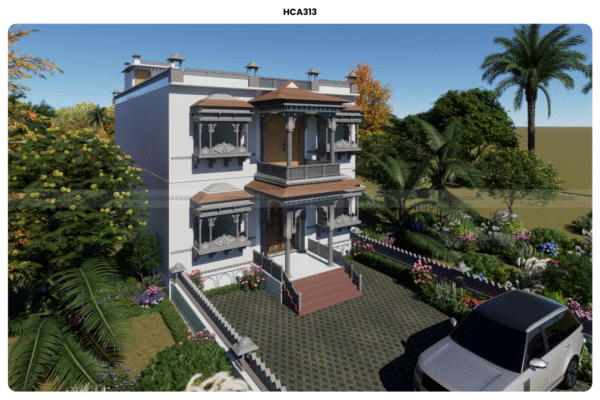
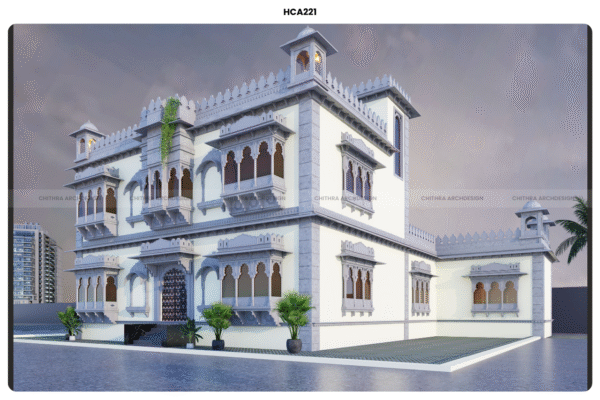
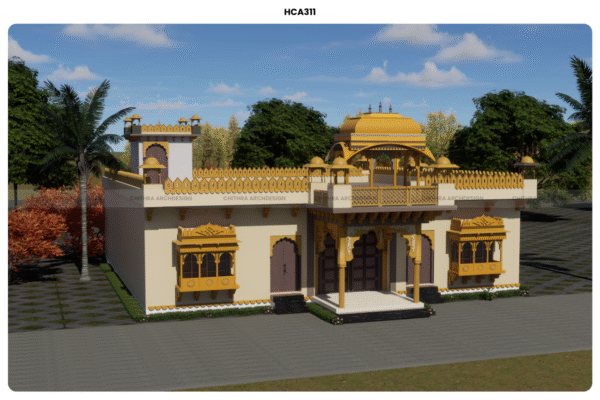
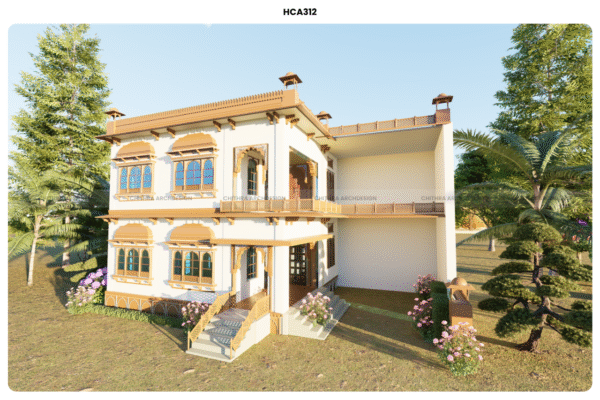
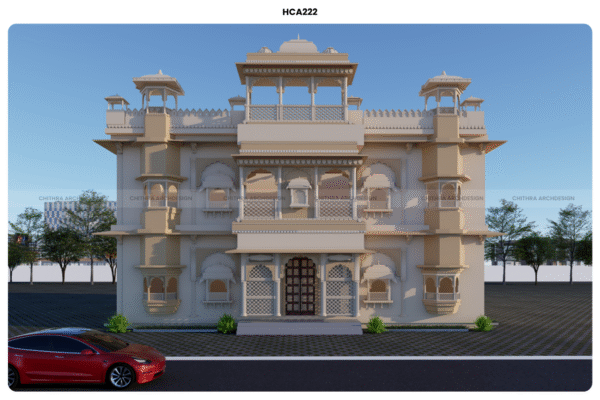
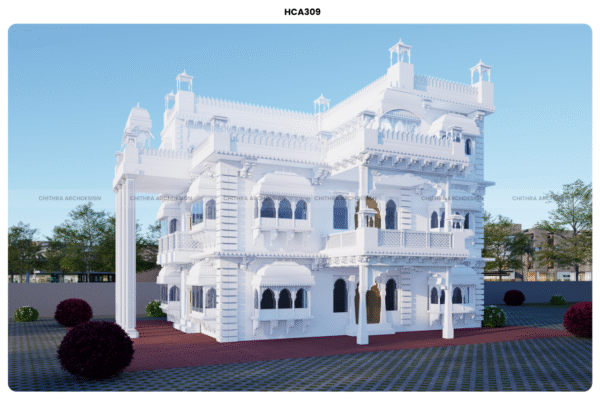
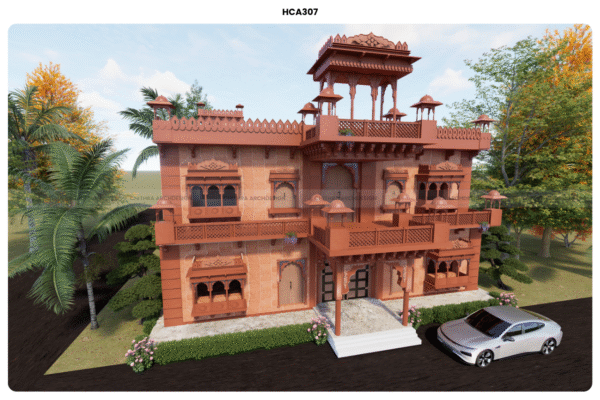
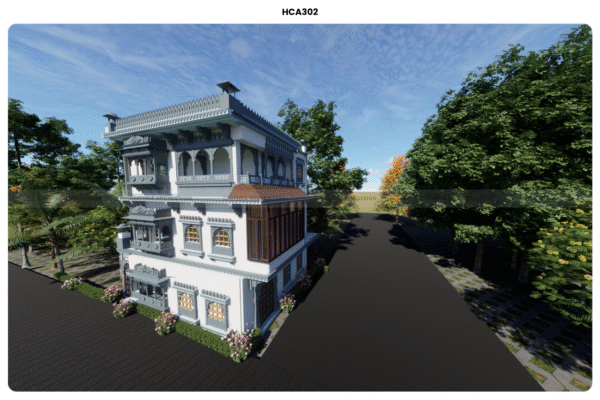
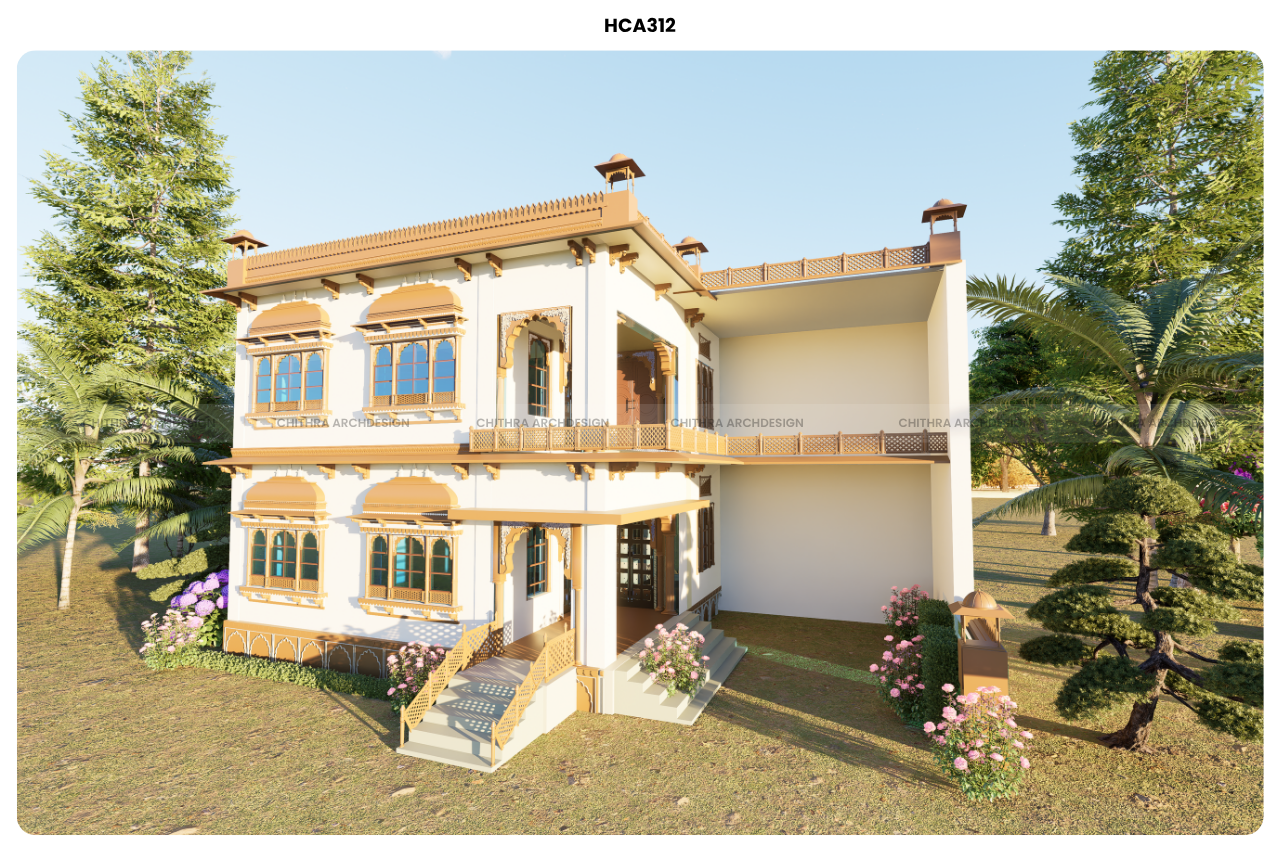
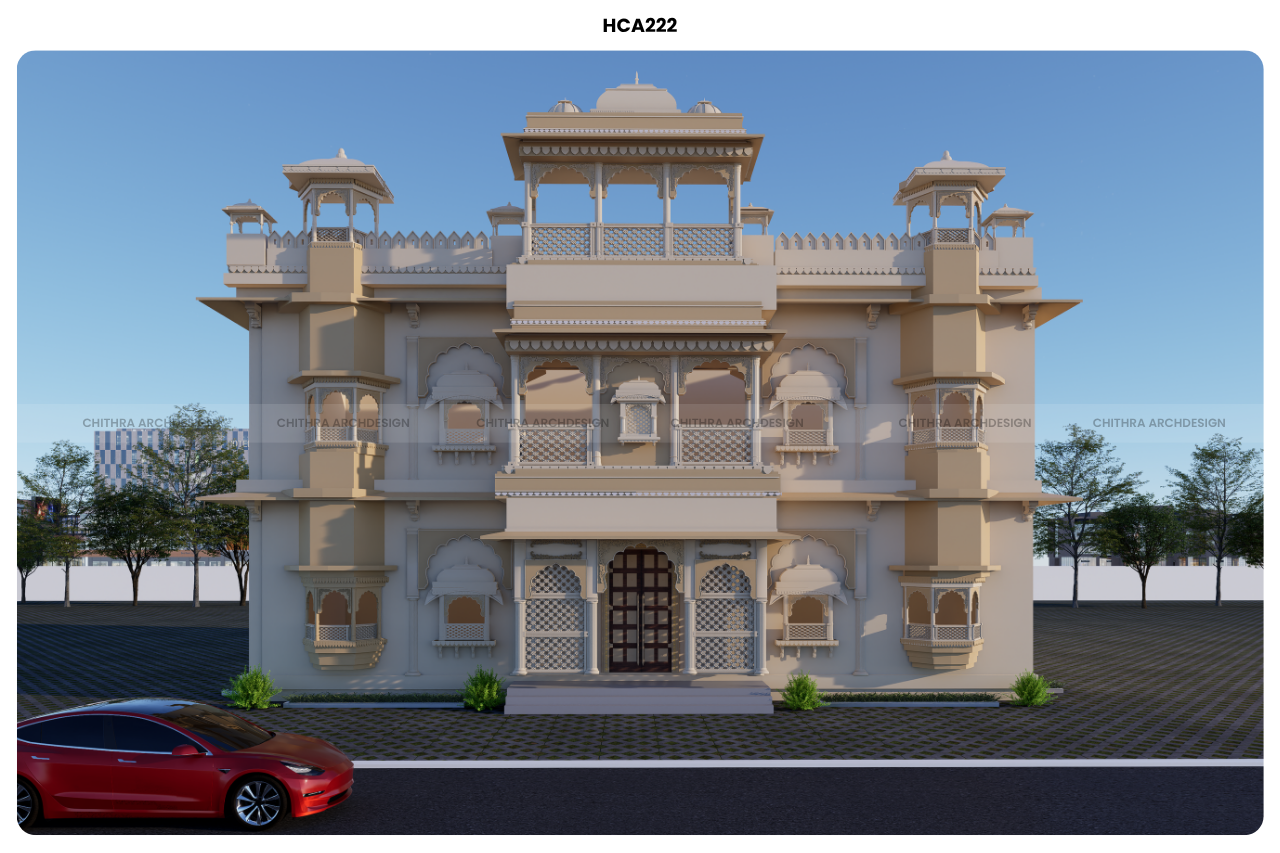
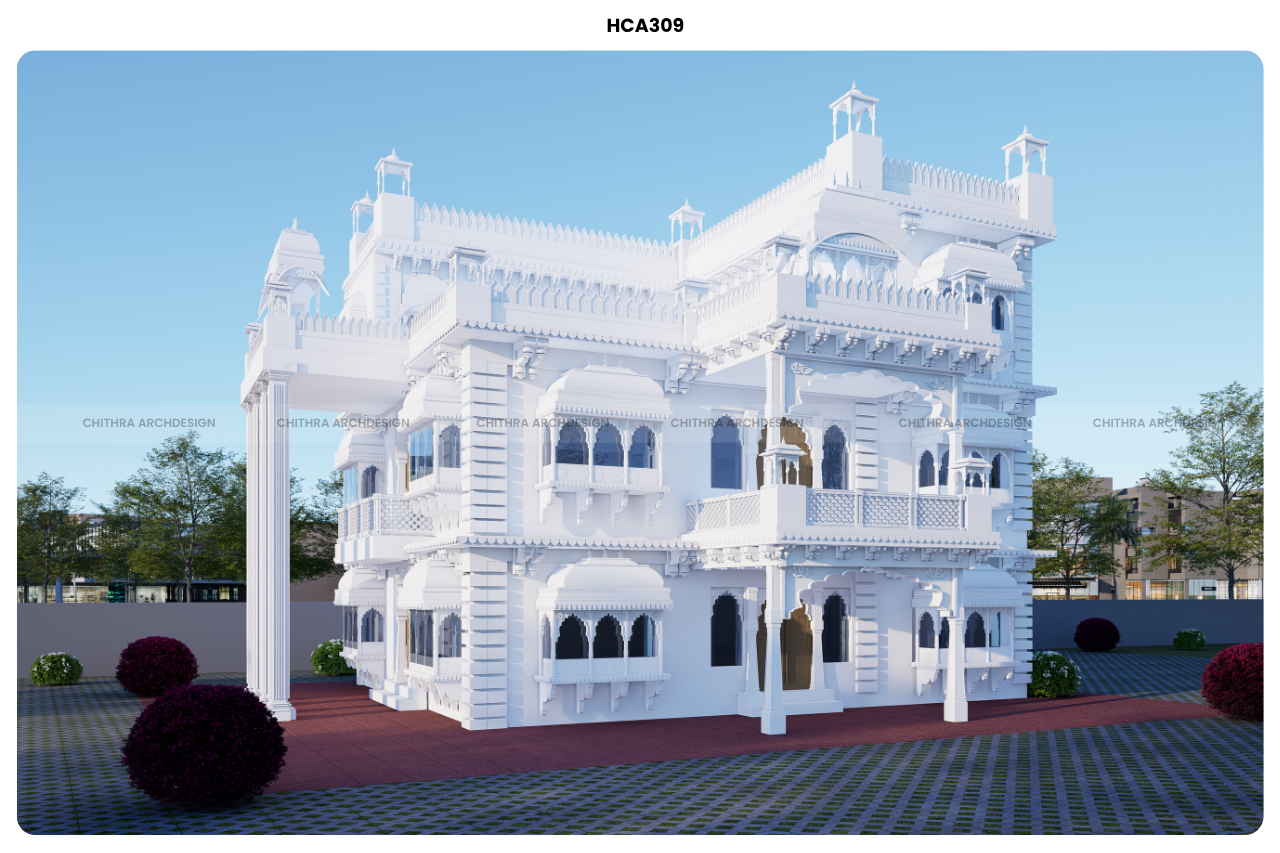
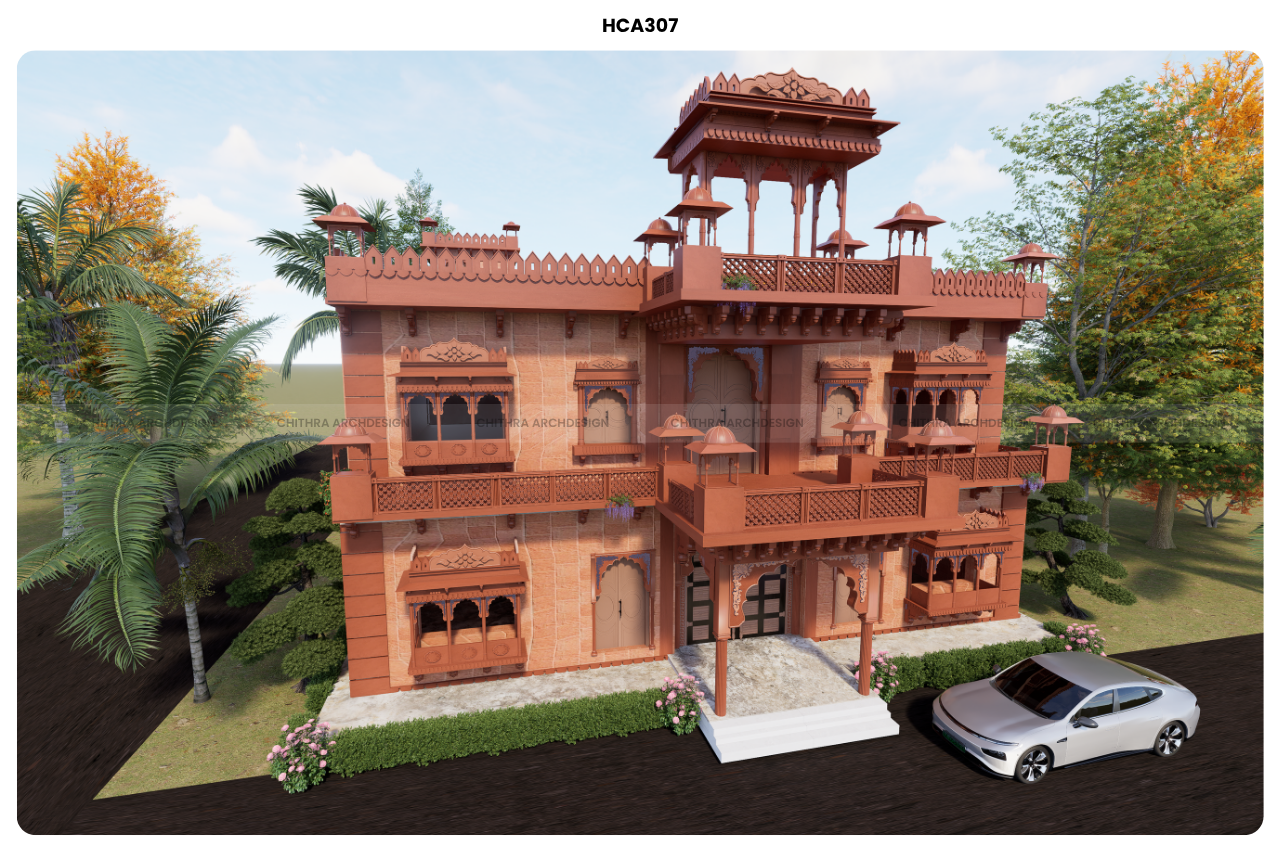
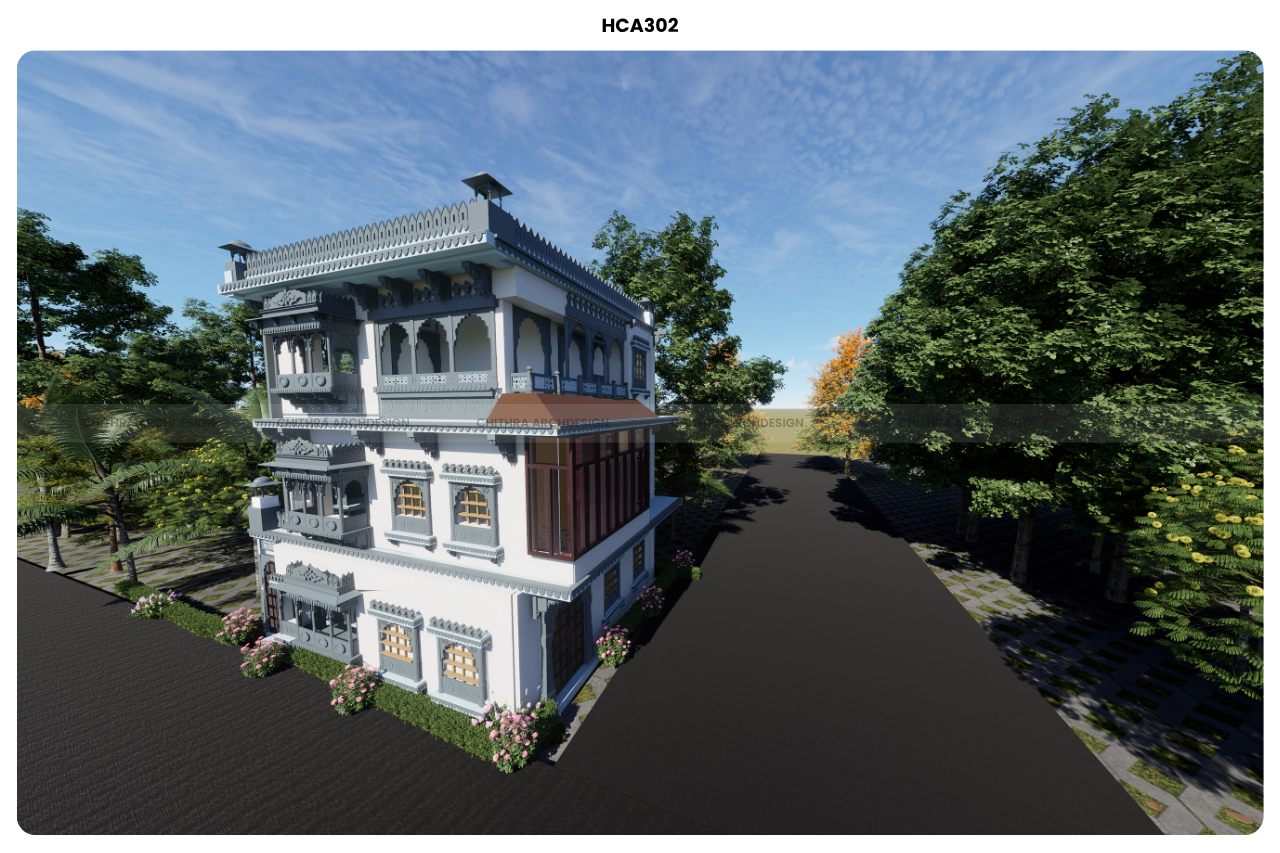
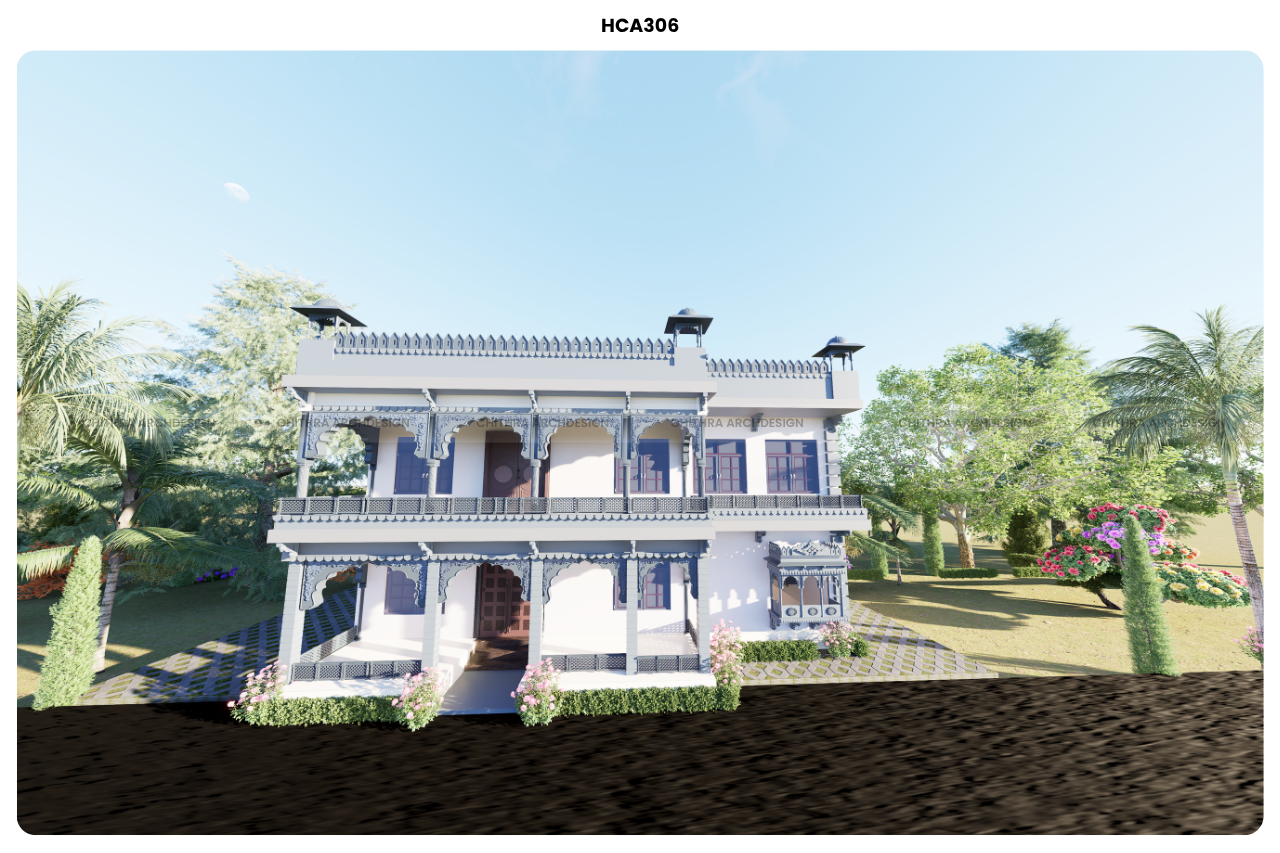
Jharokhas


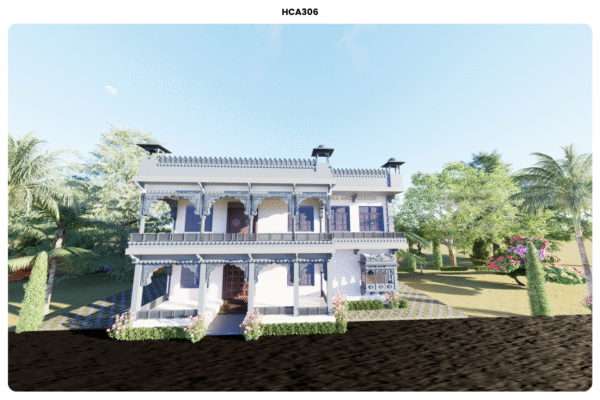
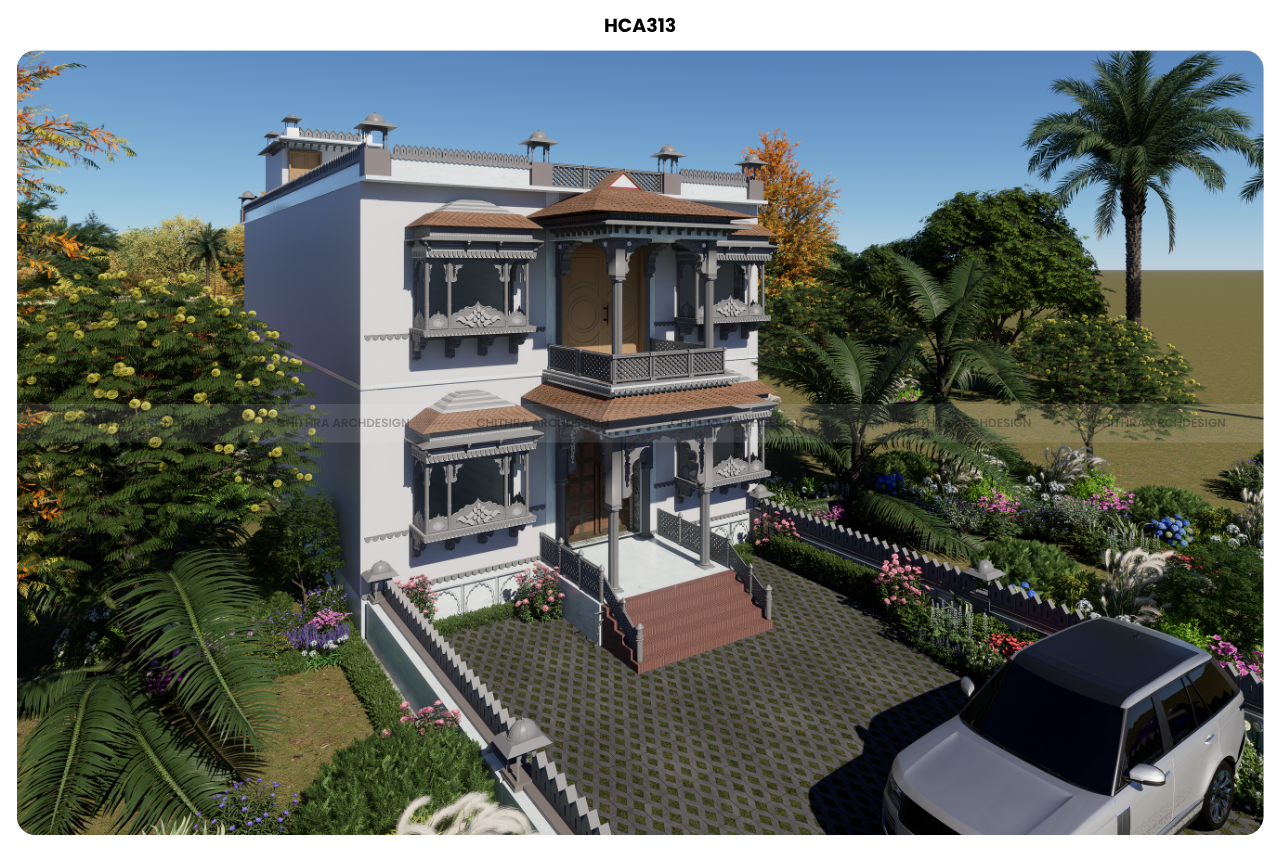
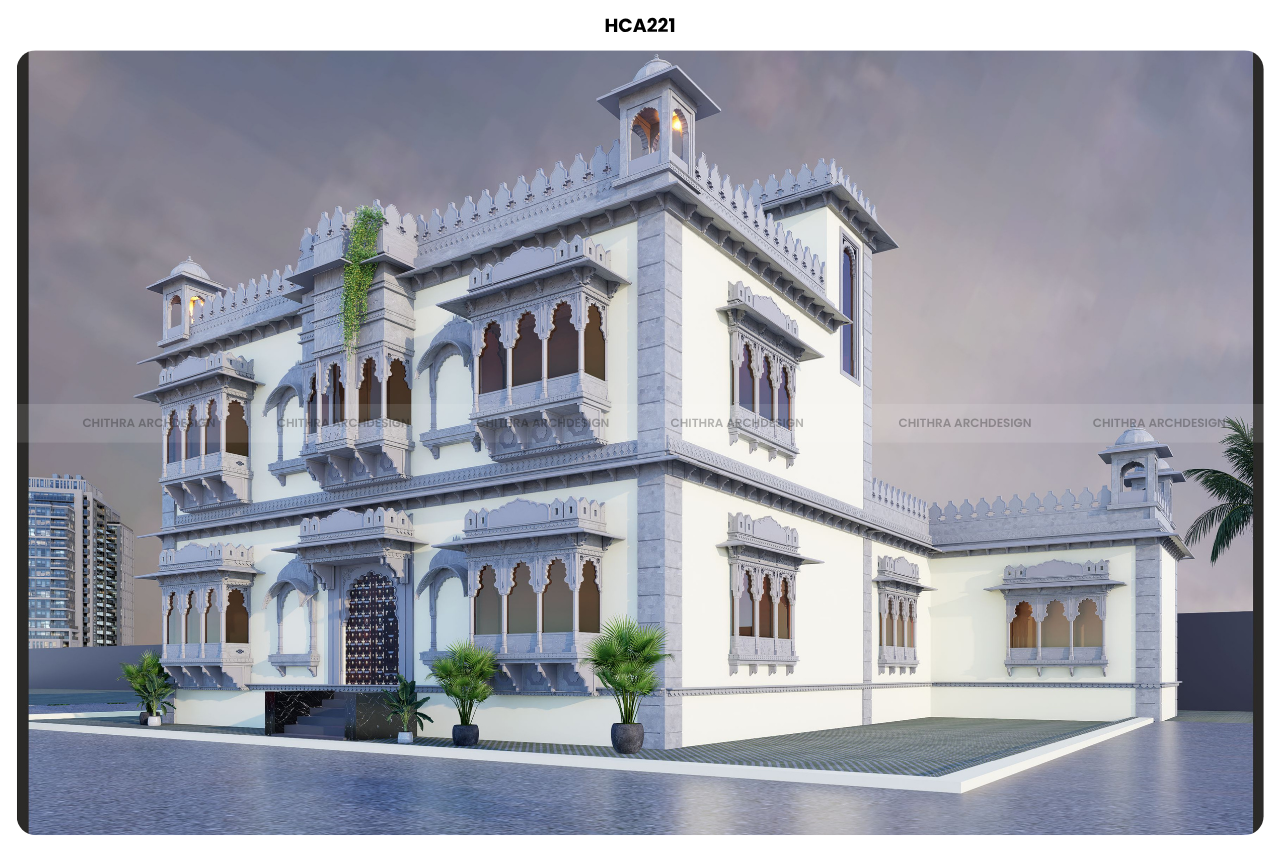
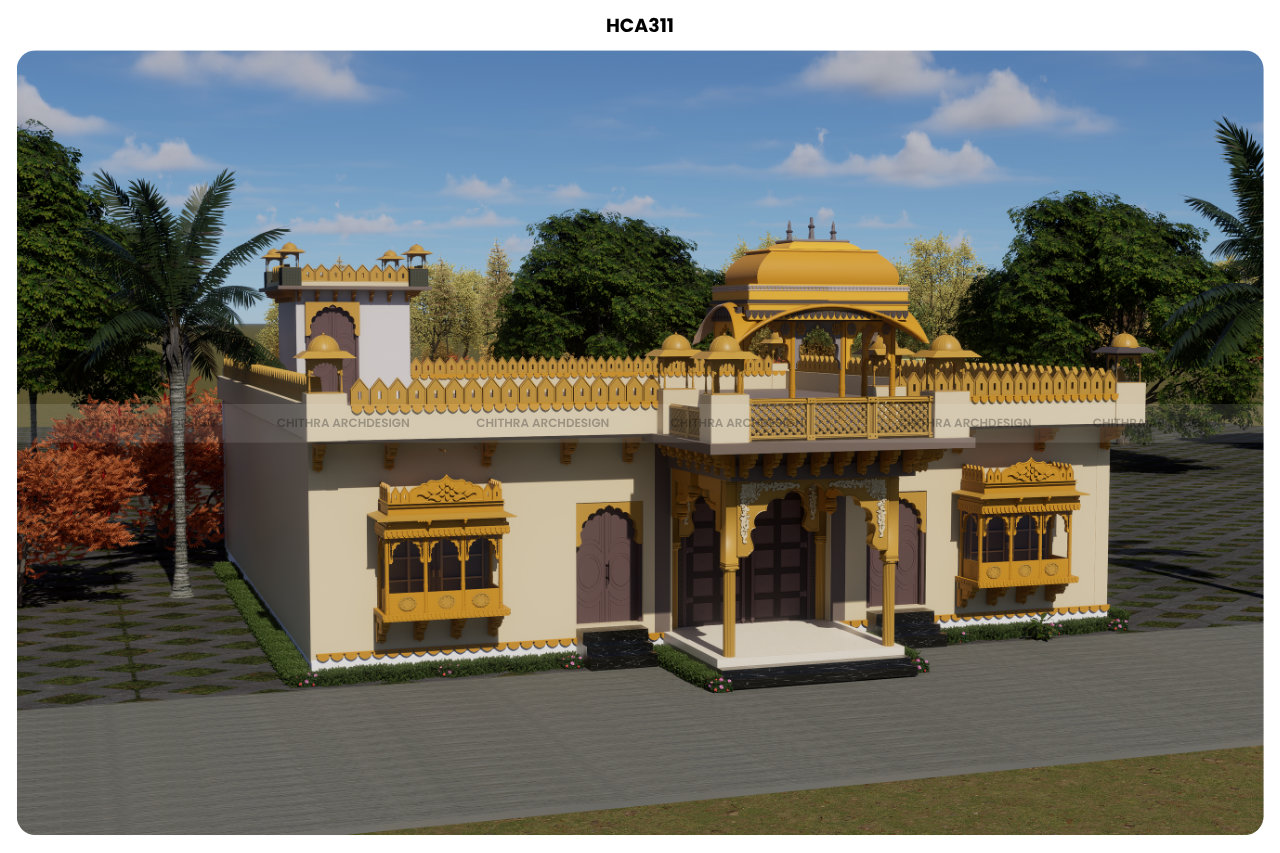
Haveli elevation design represents a rich cultural tradition of India, bringing together ornamental details, carved aesthetics, courtyards, jharokhas, and artistic façade elements that reflect the grandeur of historic Indian residences. The haveli style is cherished in Rajasthan, Gujarat, Madhya Pradesh, Punjab, and many parts of North and West India, where traditional living and heritage aesthetics still form an important part of residential identity. A haveli is not just a residence; it embodies legacy, pride, and emotional lineage passed down through generations.
At Chithra Archdesign, our elevation designers, home planners, Vastu consultants, and structural planners work collaboratively to create haveli facades that maintain cultural authenticity while ensuring modern functionality. We focus on carved stone elements, intricate jaali work, wooden balconies, and symmetrical compositions that blend visual elegance with practical living. Whether the goal is a new haveli construction or transforming an existing home into a heritage-styled façade, the haveli elevation design service ensures uniqueness, durability, and timeless charm.
Advantages of Haveli Elevation Design
Haveli elevation design is chosen for its distinctive style, emotional depth, and cultural symbolism. The benefits include:
- Cultural Identity: Reflects traditional Indian heritage, craftsmanship, and ancestral architectural expressions.
- Grandeur and Elegance: Ornamental carvings, domes, pillars, and arches create a visually striking façade.
- Vastu Harmony: Elevation elements are designed aligning with traditional Vastu principles for harmony and prosperity.
- Custom Craftsmanship: Designs incorporate handmade stonework, wood carvings, and traditional motifs tailored to personal preference.
- Durability and Longevity: Materials like sandstone, marble, and seasoned wood enhance structural longevity with a timeless appearance.
- Prestige and Legacy: A haveli façade elevates the home into a heritage landmark reflecting family status and pride.
This design approach suits bungalows, villas, courtyard homes, joint family residences, ancestral plots, and spiritual lifestyle households.
Planning Process for Haveli Design
Creating a haveli elevation requires careful planning that respects both tradition and modern living. Our process involves:
- Understanding Family Requirements:
We discuss lifestyle, cultural significance, preferred regional style, and functional needs of residents. - Site and Surrounding Study:
The plot orientation, climate, sunlight direction, wind flow, and local environment are analyzed. - Concept Layout Preparation:
Home planners create internal spatial alignment supportive of Vastu guidelines and comfort-based movement planning. - Crafting the Elevation Concept:
Elevation designers conceptualize façade elements like arches, balconies, carved pillars, domes, jaali patterns, entrance gateways, and courtyard openings. - Material Selection:
Natural stone, textured plaster, Kota stone, teakwood, or metalwork is selected based on budget and regional climate. - 3D Visual Rendering:
High-quality 3D visualization helps the client understand how the final haveli will look from different angles and lighting conditions. - Structural Planning:
Structural planners define load-bearing elements ensuring safety and longevity without compromising the aesthetic expression. - Execution Guidance and Support:
We provide construction-ready drawings and guidance to ensure the design is accurately built on-site.
This collaborative method ensures precision, harmony, beauty, and cultural authenticity.
Elevation Development Process
The haveli elevation design process focuses on ornamental and balanced façade composition:
- Façade Symmetry and Proportions
- Placement of Jharokhas (ornamental projections)
- Use of domes, minarets, and arches
- Carved columns and stone jaali patterns
- Carved balcony and chajja details
- Traditional gateways with handmade detailing
The emphasis remains on maintaining heritage style while adapting dimensions to the modern household scale.
Structural Design Considerations
While the exterior is traditional, the internal structure follows modern engineering for long-term safety:
- RCC framework for strength
- Durable foundation systems suited to soil conditions
- Weather-resistant stone and plaster application
- Protection coatings for wooden and metal elements
- Earthquake safety considerations in seismic regions
- Water drainage slopes and moisture control layers
This ensures the haveli maintains its beauty and integrity for decades.
Styles of Haveli Elevation Covered
1. Rajasthani Haveli Style
- Ornamental jharokhas, sandstone carvings, domes, and jaalis
- Ideal for warm climates and desert regions
2. Gujarati Haveli Style
- Intricate woodwork, temple-like brackets, and bold entrance gateways
3. Punjabi Haveli Style
- Grand gates, brick masonry with intricate plasterwork, and open courtyards
4. Maratha / Central Indian Haveli Style
- Balanced arches, subtle carvings, and earthy color combinations
5. Indo-Islamic Haveli Style
- Symmetrical façade, pointed arches, courtyard-centered layouts, and fine filigree detailing
Modern-Heritage Hybrid Style
- Combines traditional façade beauty with modern amenities such as large windows, glass elements, and contemporary interior planning
Regional Relevance
We design haveli elevations adaptable to:
- Rajasthan stone terrain regions
- Gujarat coastal climates
- Punjab wide-front courtyard houses
- Madhya Pradesh central plains
- Uttar Pradesh joint-family household layouts
- Urban residential plots (20×45, 25×50, 30×60, 40×60 feet etc.)
- Village and rural estate plots with large frontage
Climate-specific materials, ventilation patterns, and roof forms are adjusted for comfort and durability.
Vastu Integration
Vastu principles play a key role in haveli planning:
- Entrances planned toward auspicious directions
- Courtyard for positive airflow and spiritual grounding
- Placement of family gathering spaces in Vastu-approved zones
- Alignment of bedrooms, pooja rooms, and kitchen based on directional guidance
- Use of natural elements (water, air, earth, fire, space) in balanced composition
Our Vastu consultants ensure the haveli not only looks traditional but feels spiritually uplifting.
FAQs
What makes a haveli elevation different from modern house elevations?
- Haveli designs feature carvings, domes, jaalis, jharokhas, and traditional shapes, while modern designs focus on minimal lines and contemporary materials.
Can haveli designs be created for small or medium plot sizes?
- Yes. Even 20×40 or 25×50 plots can be designed with haveli-inspired features without losing authenticity.
Which materials are commonly used in haveli exteriors?
- Sandstone, lime plaster, teakwood, Kota stone, red stone, heritage-style tiles, and metal grillwork.
Do you provide 3D elevation rendering for haveli designs?
- Yes. High-quality 3D renders allow clear visualization before construction.
Can modern interiors be included inside a traditional haveli exterior?
- Absolutely. Many families prefer traditional exterior aesthetics with fully modern, luxurious interior planning.
Conclusion
A haveli elevation is more than a façade design; it is a cultural statement, a tribute to heritage, and a symbol of identity. At Chithra Archdesign, we specialize in designing authentic haveli exteriors that blend tradition, elegance, and practicality. Our elevation designers, home planners, Vastu consultants, and structural planners collaborate closely to deliver timeless designs that reflect your values and aspirations.
To begin your haveli elevation design journey, contact our design consultant today.
We also recommend exploring:
- House Plan Services
- Traditional Exterior Design Services
- Temple Elevation & Spiritual Structure Planning
Let your home reflect your heritage beautifully and gracefully.
Explore More
- Temple Elevation Design Services
- Resort & Homestay Elevation Designs
- House Front Elevation Design
- Bungalow Elevation Design Ideas
- Modern Home Elevation Designs
- Traditional House Elevation Styles
- Haveli Style Elevation Design
- Kerala Traditional Home Elevation
- Spanish Heritage Elevation Design
- Heritage House Elevation Restoration
- Gujarati Traditional Elevation Design
- Maharashtrian Wada Elevation Style
- Complete House Planning Solutions
- Vastu-Based Planning Consultation
- Home & Building Design Services
- Full Residential Planning & Support Services