
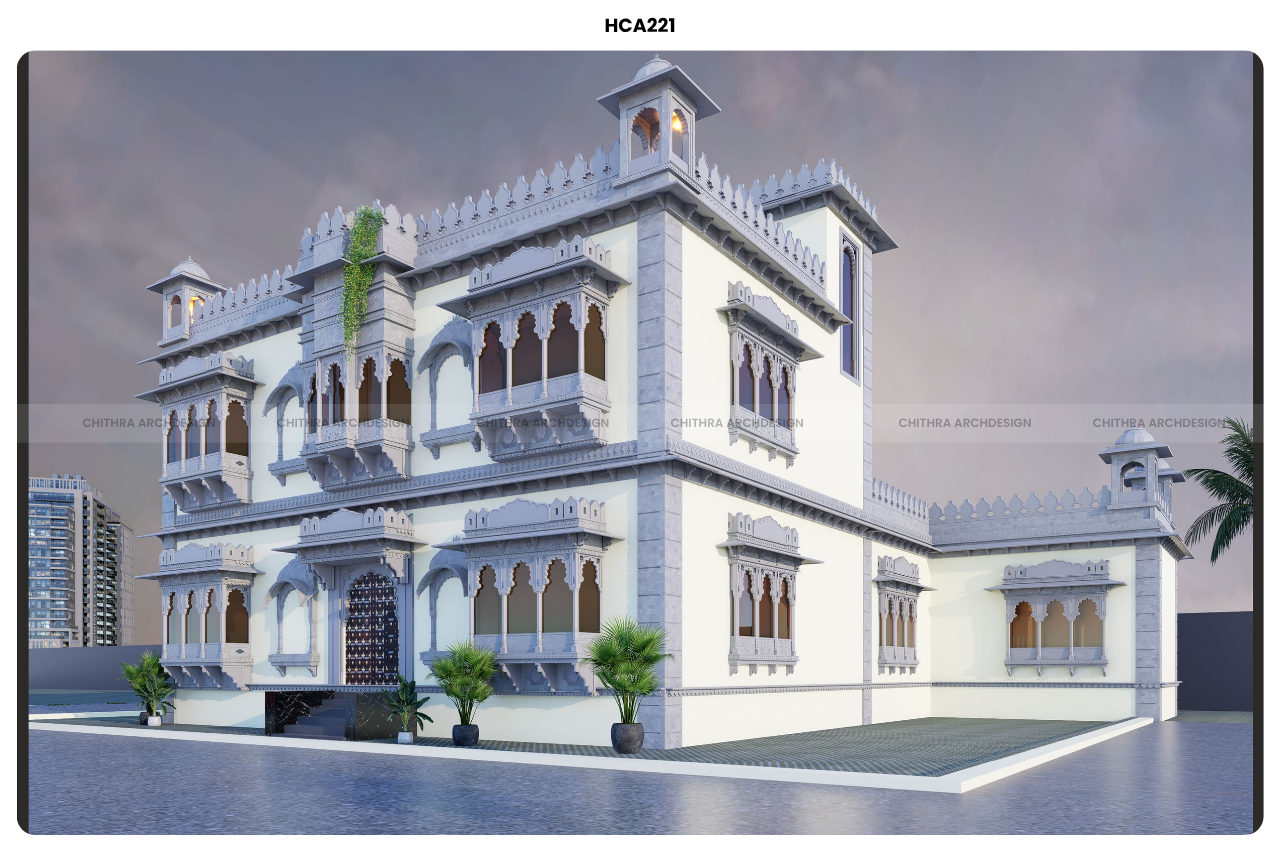
Haveli elevation design reflects the soul of India’s rich cultural heritage, blending artistry, symmetry, and storytelling into grand exterior expressions. From intricately carved facades to majestic arches and jharokhas, haveli elevations are known for their royal appeal and timeless elegance. Today, homeowners are increasingly reviving this heritage style by combining traditional haveli elevation concepts with modern planning techniques to create unique and luxurious homes.
This article explores haveli elevation design in detail, covering haveli facade design, traditional and ornamental elevations, materials, design elements, and modern adaptations—perfectly structured for SEO and reader clarity.
Understanding Haveli Elevation Design
Haveli elevation design refers to the exterior visual composition of a haveli-inspired home. Historically, havelis were large mansions built by royal families, merchants, and nobles, especially in regions like Rajasthan, Gujarat, and North India. The elevation was designed not only for aesthetics but also for climate responsiveness, privacy, and social status.
A well-planned haveli exterior design showcases symmetry, strong horizontal and vertical lines, rich textures, and handcrafted details that narrate stories of tradition and legacy.
Importance of Haveli Facade Design
The facade is the identity of a haveli. A thoughtfully designed haveli facade design enhances curb appeal while preserving cultural authenticity. Unlike contemporary flat facades, haveli facades are layered, detailed, and visually dynamic.
Key purposes of haveli facade design include:
- Creating a regal and welcoming entrance
- Reflecting cultural and historical values
- Enhancing natural ventilation and shading
- Establishing a strong architectural character
A balanced facade combines artistic detailing with proportionate massing, ensuring the elevation looks grand yet harmonious.
Traditional Haveli Elevation Features
Traditional haveli elevation design is deeply rooted in Indian craftsmanship and regional aesthetics. These elevations are inspired by centuries-old design philosophies and construction techniques.
Key Elements of Traditional Haveli Elevation
- Jharokhas (Overhanging Balconies): Intricately carved stone or wooden balconies that add depth and elegance
- Arched Openings: Semi-circular or cusped arches over doors and windows
- Chhatris: Dome-shaped pavilions that crown the elevation
- Thick Walls: Provide insulation and enhance the solid, royal appearance
- Central Axis Symmetry: Balanced design on both sides of the elevation
Traditional haveli elevations often use earthy tones and natural materials that age gracefully over time.
Ornamental Haveli Elevation Design
Ornamental haveli elevation design focuses on fine detailing and decorative richness. This style is ideal for homeowners who want a visually striking exterior with artistic expression.
Decorative Elements Used in Ornamental Elevations
- Hand-carved stone panels
- Floral and geometric motifs
- Decorative brackets and cornices
- Jaali screens for windows and balconies
- Sculpted columns and pilasters
Ornamental haveli elevations transform the exterior into a piece of art, showcasing skilled craftsmanship and attention to detail.
Materials Used in Haveli Exterior Design
Material selection plays a crucial role in defining the authenticity and durability of haveli elevation design.
Common Materials
- Natural Stone: Sandstone, limestone, and marble for a royal finish
- Wood: Used in doors, brackets, and balconies for warmth
- Lime Plaster: Traditional finish that allows walls to breathe
- Metal Accents: Brass or wrought iron for grills and detailing
Modern haveli exterior designs may also incorporate high-quality concrete moldings that replicate traditional carvings while improving durability and cost efficiency.
Color Palette for Haveli Elevations
Color selection significantly impacts the visual appeal of a haveli elevation. Traditional hues are inspired by nature and royal palaces.
Popular color choices include:
- Sand beige and cream
- Warm yellows and ochres
- Soft terracotta tones
- Muted whites with stone highlights
These colors enhance ornamental details and maintain the timeless charm of haveli facades.
Modern Adaptations of Haveli Elevation Design
While traditional haveli elevation design remains popular, modern homeowners often seek a balance between heritage aesthetics and contemporary living.
Modern Haveli Elevation Trends
- Cleaner lines with selective ornamentation
- Simplified jharokhas with modern materials
- Combination of traditional arches and modern windows
- Energy-efficient lighting to highlight facade details
- Blending courtyards with modern elevation proportions
This fusion approach ensures the haveli exterior design feels relevant, functional, and luxurious.
Lighting Design for Haveli Facades
Architectural lighting enhances the grandeur of haveli elevations after sunset. Proper lighting highlights carvings, arches, and textures.
Recommended lighting techniques:
- Warm LED uplighting for columns and jharokhas
- Wall washers to emphasize textures
- Soft ambient lighting near entrances
- Hidden lights under cornices and balconies
Well-planned lighting elevates the ornamental beauty without overpowering the design.
Benefits of Choosing Haveli Elevation Design
Opting for a haveli-inspired elevation offers several long-term benefits:
Why Choose ChithraArchDesign for Haveli Elevation Design
ChithraArchDesign specializes in creating authentic and customized haveli elevation designs that reflect traditional elegance while accommodating modern needs. Each design is thoughtfully planned to maintain proportion, detailing, and cultural integrity, ensuring a unique exterior that stands out.
Frequently Asked Questions (FAQs
1. What is a haveli elevation design?
Haveli elevation design refers to the exterior design of a home inspired by traditional Indian havelis, featuring arches, jharokhas, ornamental detailing, and symmetrical layouts.
2. Can haveli elevation design be used for modern homes?
Yes, haveli elevation design can be adapted for modern homes by simplifying details and combining traditional elements with contemporary materials.
3. Which materials are best for haveli facade design?
Natural stone, wood, lime plaster, and decorative concrete moldings are commonly used for durable and authentic haveli facades.
4. Is ornamental haveli elevation expensive?
Costs depend on the level of detailing and materials used. Modern techniques can replicate ornamental details cost-effectively.
5. What colors suit traditional haveli elevations?
Earthy tones like beige, cream, yellow, and terracotta are ideal for enhancing traditional haveli aesthetics.
Contact Details – ChithraArchDesign
Website: https://chithraarchdesign.com
Email: chithracompanies@gmail.com
Phone: +91-9887999292